High-quality 3D assets at affordable prices — trusted by designers, engineers, and creators worldwide. Made with care to be versatile, accessible, and ready for your pipeline.
Included File Formats
This model is provided in 14 widely supported formats, ensuring maximum compatibility:
• - FBX (.fbx) – Standard format for most 3D software and pipelines
• - OBJ + MTL (.obj, .mtl) – Wavefront format, widely used and compatible
• - STL (.stl) – Exported mesh geometry; may be suitable for 3D printing with adjustments
• - STEP (.step, .stp) – CAD format using NURBS surfaces
• - IGES (.iges, .igs) – Common format for CAD/CAM and engineering workflows (NURBS)
• - SAT (.sat) – ACIS solid model format (NURBS)
• - DAE (.dae) – Collada format for 3D applications and animations
• - glTF (.glb) – Modern, lightweight format for web, AR, and real-time engines
• - 3DS (.3ds) – Legacy format with broad software support
• - 3ds Max (.max) – Provided for 3ds Max users
• - Blender (.blend) – Provided for Blender users
• - SketchUp (.skp) – Compatible with all SketchUp versions
• - AutoCAD (.dwg) – Suitable for technical and architectural workflows
• - Rhino (.3dm) – Provided for Rhino users
Model Info
• - All files are checked and tested for integrity and correct content
• - Geometry uses real-world scale; model resolution varies depending on the product (high or low poly)
• • - Scene setup and mesh structure may vary depending on model complexity
• - Rendered using Luxion KeyShot
• - Affordable price with professional detailing
Buy with confidence. Quality and compatibility guaranteed.
If you have any questions about the file formats, feel free to send us a message — we're happy to assist you!
Sincerely,
SURF3D
Trusted source for professional and affordable 3D models.
More Information About 3D Model :
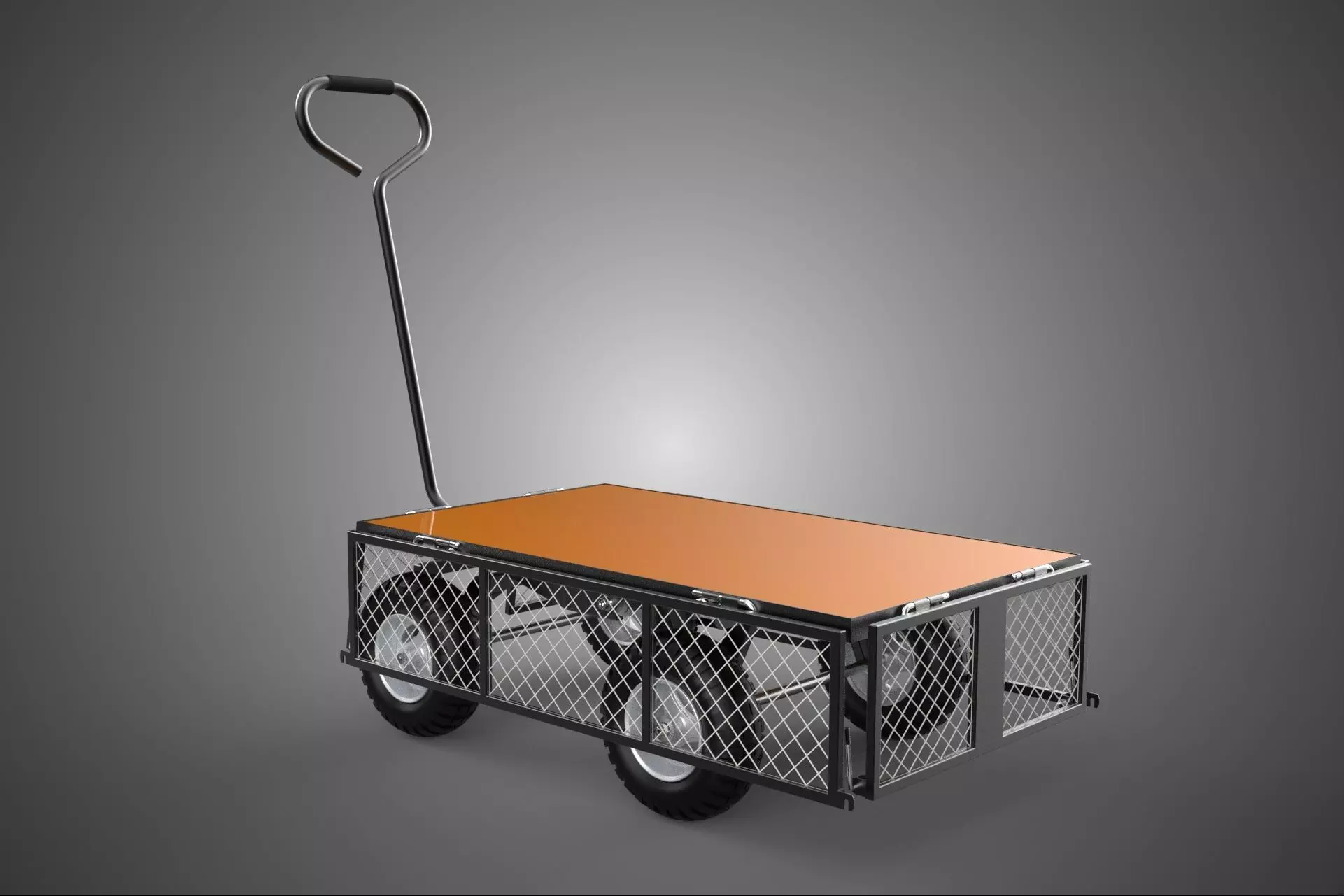
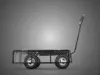
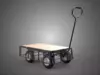
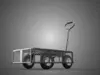
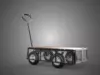
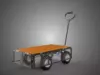
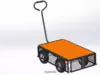
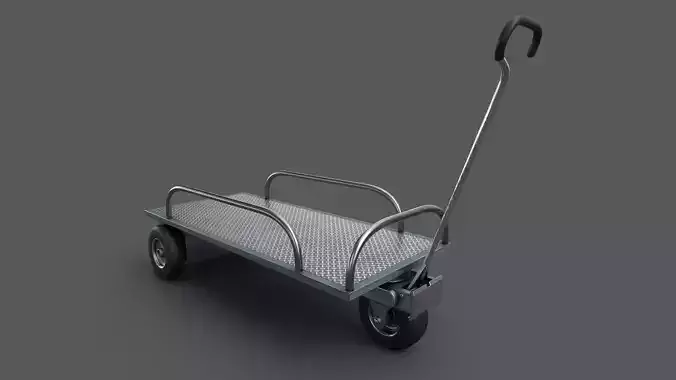
A versatile folded metal grid side mesh cage trolley cart wagon 4W designates a specialized category of mobile material handling equipment meticulously engineered for the efficient, secure, and adaptable transportation of goods across a multitude of operational environments. This multi-purpose device is structurally characterized by its robust metallic construction, a distinctive cage-like containment system featuring grid or mesh side panels, and a stable four-wheeled (4W) configuration, ensuring both exceptional maneuverability and load stability. Its inherent versatile attribute stems from a design philosophy that prioritizes adaptability, making it suitable for applications spanning from rigorous industrial logistics to dynamic commercial retail settings and even specialized domestic tasks.
Construction and Materials:
The foundational structure of this equipment is typically fabricated from high-strength sheet metal, commonly steel or aluminum, which undergoes precise folding and bending processes. This folded metal construction methodology not only enhances the structural integrity and rigidity of the unit but often contributes to a reduced overall tare weight compared to solid-cast alternatives, while simultaneously facilitating efficient mass production. Steel variants are frequently finished with durable coatings such as powder coating, galvanization, or electro-plating. These treatments are applied to impart superior resistance to corrosion, abrasion, and general wear, thereby significantly extending the equipment's operational lifespan, particularly in demanding conditions. Aluminum versions offer a lighter alternative, which is advantageous in applications where weight reduction is paramount, and inherently provide excellent corrosion resistance. The design frequently incorporates modular elements, with components precisely fastened, riveted, or welded to form a cohesive and robust assembly.
Containment System – Grid Side Mesh Cage:
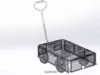
A defining feature of this device is its grid side mesh cage containment system. This enclosure is characterized by side panels constructed from a grid or mesh pattern, forming a protective cage around the items being transported. The open nature of this grid or mesh design confers several distinct advantages:
- Visibility: Operators can readily ascertain the contents of the trolley without the need to physically open the cage, which aids in inventory management, rapid identification, and efficient stock-taking.
- Ventilation: This is crucial for transporting items that are sensitive to temperature fluctuations or require continuous airflow, mitigating heat buildup or condensation within the enclosure.
- Security and Containment: The cage structure effectively prevents items from falling out during transit, thereby securing loads, especially those comprising smaller or irregularly shaped objects. Many designs include hinged or removable gates or access points to facilitate easy loading and unloading.
- Weight Reduction: Compared to solid-walled containers, the grid or mesh design significantly reduces the overall weight of the unit, contributing to easier manual handling and potentially allowing for higher net load capacities.
- Drainage and Cleanliness: In environments where liquids, dust, or debris may be present, the open mesh structure allows for efficient drainage and air circulation, simplifying cleaning processes and preventing accumulation.
Mobility System – Four-Wheeled (4W) Configuration:
The 4W configuration provides inherent stability, distributing the load evenly across four points of contact with the ground. This minimizes stress on individual wheels and enhances overall durability. The type of wheels employed is often tailored to the intended application:
- Swivel Casters: Typically used on all four wheels, or in conjunction with two fixed wheels, to afford exceptional maneuverability, enabling the unit to pivot and navigate confined spaces with ease.
- Fixed Wheels: Provide directional stability, commonly mounted at one end of the chassis to guide the trolley in a straight trajectory.
- Pneumatic Wheels: Best suited for uneven outdoor terrains, offering superior shock absorption and a smoother ride, which is vital for protecting delicate or sensitive cargo.
- Solid Rubber or Polyurethane Wheels: Ideal for indoor use on smooth, finished surfaces, providing durability, excellent traction, and non-marking properties.
Braking mechanisms, such as foot-operated wheel brakes or total-lock casters, are frequently integrated into the design to ensure secure positioning during loading, unloading, or temporary storage. The combined nomenclature of trolley cart wagon reflects its adaptability to function as a hand-pushed device (trolley/cart) or a potentially larger, pulled unit (wagon), depending on its size, load capacity, and the design of its handle or towing attachment (e.g., simple push-bars, ergonomic handles, or tow hitches for mechanical pulling).
Versatility and Applications:
The versatile aspect is paramount to its utility. Its adaptable design allows it to function effectively across a broad spectrum of applications, including but not limited to:
- Warehousing and Logistics: Essential for moving inventory, facilitating order picking, assisting in parcel delivery, and streamlining inter-departmental transport.
- Manufacturing and Assembly: Used for transporting components, tools, raw materials, or finished goods between workstations on a production line.
- Retail and Commercial: Employed for stock replenishment, efficient waste collection, and general merchandise movement within stores, supermarkets, or commercial premises.
- Hospitality and Healthcare: Utilized for laundry collection, efficient supply distribution, and sterile or general waste management.
- Gardening and Landscaping: Indispensable for hauling tools, bags of soil, plants, debris, or other gardening requisites.