High-quality 3D assets at affordable prices — trusted by designers, engineers, and creators worldwide. Made with care to be versatile, accessible, and ready for your pipeline.
Included File Formats
This model is provided in 14 widely supported formats, ensuring maximum compatibility:
• - FBX (.fbx) – Standard format for most 3D software and pipelines
• - OBJ + MTL (.obj, .mtl) – Wavefront format, widely used and compatible
• - STL (.stl) – Exported mesh geometry; may be suitable for 3D printing with adjustments
• - STEP (.step, .stp) – CAD format using NURBS surfaces
• - IGES (.iges, .igs) – Common format for CAD/CAM and engineering workflows (NURBS)
• - SAT (.sat) – ACIS solid model format (NURBS)
• - DAE (.dae) – Collada format for 3D applications and animations
• - glTF (.glb) – Modern, lightweight format for web, AR, and real-time engines
• - 3DS (.3ds) – Legacy format with broad software support
• - 3ds Max (.max) – Provided for 3ds Max users
• - Blender (.blend) – Provided for Blender users
• - SketchUp (.skp) – Compatible with all SketchUp versions
• - AutoCAD (.dwg) – Suitable for technical and architectural workflows
• - Rhino (.3dm) – Provided for Rhino users
Model Info
• - All files are checked and tested for integrity and correct content
• - Geometry uses real-world scale; model resolution varies depending on the product (high or low poly)
• • - Scene setup and mesh structure may vary depending on model complexity
• - Rendered using Luxion KeyShot
• - Affordable price with professional detailing
Buy with confidence. Quality and compatibility guaranteed.
If you have any questions about the file formats, feel free to send us a message — we're happy to assist you!
Sincerely,
SURF3D
Trusted source for professional and affordable 3D models.
More Information About 3D Model :
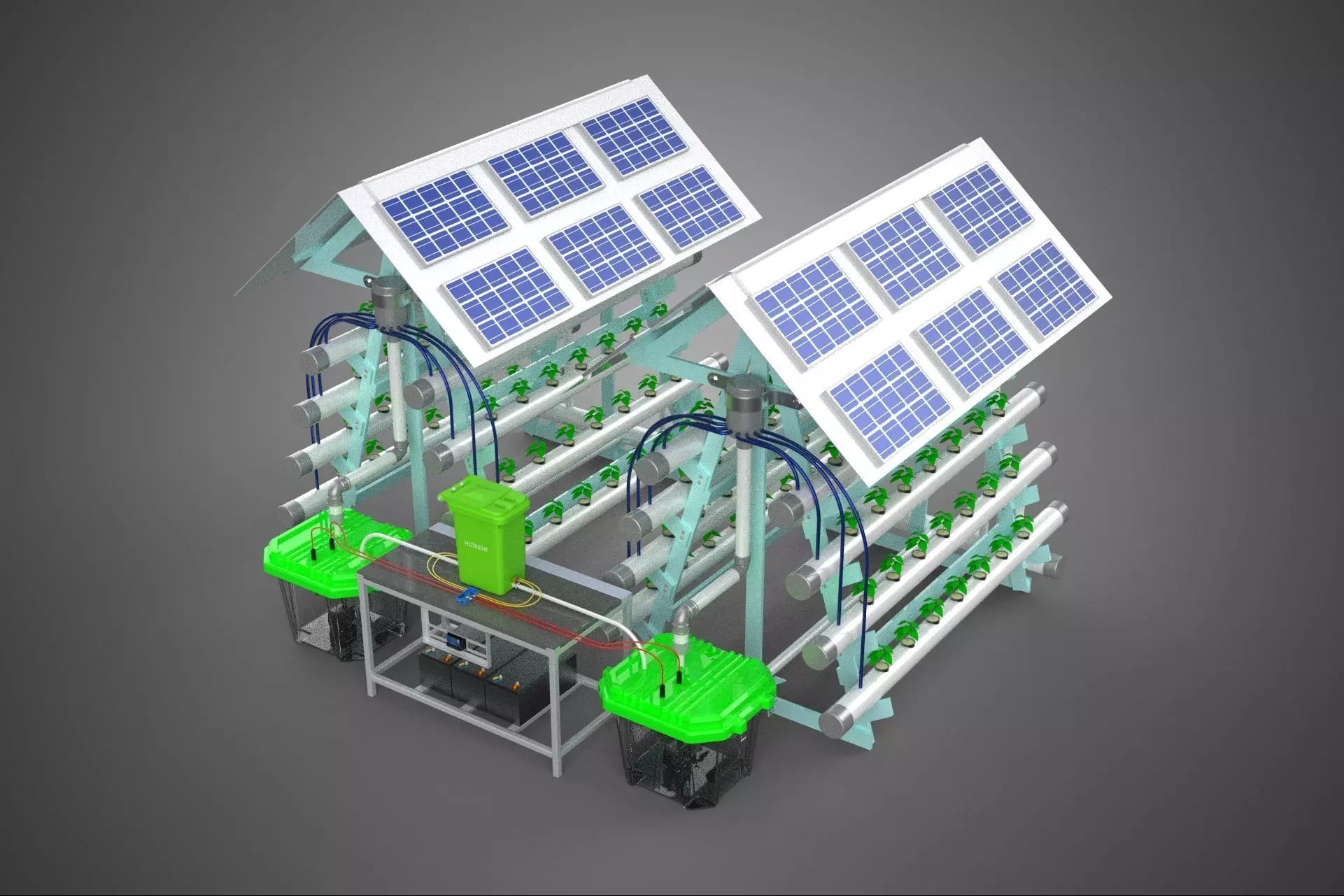
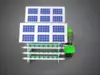
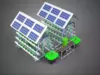
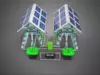
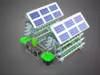
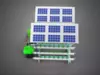
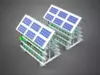
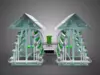
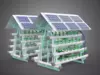
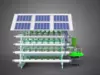
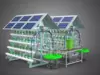
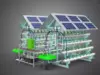
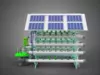
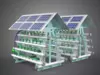
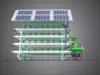
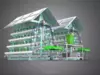
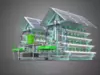
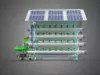
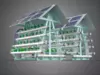
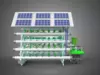
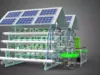
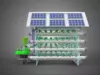
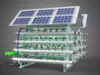
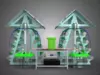
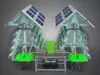
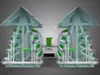
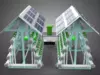
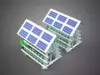
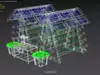
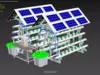
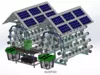
An IoT Smart Hydroponic Solar Panel Power Farm Plant Water Nutrient system represents a sophisticated, integrated agricultural paradigm designed for highly efficient, sustainable, and automated plant cultivation. This comprehensive system synergistically combines advanced soilless farming techniques with renewable energy generation and the intelligent monitoring and control capabilities of the Internet of Things (IoT). Its primary objective is to optimize plant growth conditions by precisely managing nutrient delivery and environmental factors, largely autonomously, while minimizing ecological footprint and operational costs.
Core Components and Integration:
- Hydroponic Cultivation: At its foundation, the system employs hydroponics, a soilless agricultural method where plants are grown with their roots directly immersed in or periodically irrigated by mineral nutrient solutions dissolved in water. This technique eliminates soil-borne pests and diseases, significantly reduces water consumption (often by 70-90% compared to traditional field farming), and typically allows for accelerated growth rates and increased yields due to direct access to essential nutrients and controlled root environments. Common hydroponic methodologies such as Nutrient Film Technique (NFT), Deep Water Culture (DWC), Drip Systems, or Aeroponics can be integrated based on specific crop requirements and system design.
- Solar Panel Power Generation: The entire agricultural operation is powered by an integrated solar photovoltaic (PV) array. These solar panels convert sunlight directly into electricity, providing a clean, sustainable, and renewable energy source for all system components. This includes, but is not limited to, water pumps for nutrient solution circulation, aeration pumps, environmental sensors, microcontrollers, LED grow lights (if supplemental lighting is required), and communication modules. The reliance on solar power drastically reduces operational energy costs, minimizes the carbon footprint, and enables system deployment in remote areas or locations with unreliable electrical grids, fostering energy independence. Energy storage solutions, typically battery banks, are often incorporated to ensure continuous operation during periods of low solar irradiance or at night.
- Internet of Things (IoT) and Smart Control: The Smart and IoT aspects define the system's intelligent automation and remote management capabilities. A network of interconnected sensors continuously monitors critical environmental and nutrient parameters. These include:
- Nutrient Solution Parameters: pH levels (acidity/alkalinity), Electrical Conductivity (EC) or Total Dissolved Solids (TDS) for nutrient concentration, and water temperature.
- Environmental Conditions: Air temperature, relative humidity, light intensity (Photosynthetically Active Radiation - PAR), and potentially carbon dioxide (CO2) levels within the growing enclosure.
- System Status: Water levels in reservoirs, pump operational status, and battery charge levels.
Data collected by these sensors is transmitted to a central microcontroller or embedded system, which processes the information. Utilizing pre-programmed algorithms, control logic, and potentially machine learning models, the system autonomously actuates various components to maintain optimal conditions. For instance, dosing pumps add specific nutrient solutions to balance pH and EC, circulation pumps ensure even nutrient distribution, ventilation systems regulate air parameters, and LED lights provide supplementary illumination as needed. All collected data is typically uploaded to a cloud-based platform, enabling real-time remote monitoring, data analytics, historical logging, and control via a user-friendly interface (e.g., a web application or mobile app). This facilitates precision agriculture, where resources are applied with high accuracy, minimizing waste and maximizing plant productivity.
- Water and Nutrient Management: Precision is paramount in delivering water and dissolved nutrients. The IoT system continuously evaluates the nutrient solution's composition against optimal ranges for the specific crop. When nutrient levels deplete, become imbalanced, or pH deviates, the smart system automatically activates peristaltic or diaphragm pumps to dispense precise volumes of stock nutrient solutions (e.g., pH up/down, concentrated macro/micro-nutrients) from separate reservoirs into the main system. Water levels are also maintained, often through automated refilling mechanisms, to compensate for evapotranspiration losses. This closed-loop monitoring and automated adjustment ensure that plants consistently receive an ideal, tailored nutrient diet, preventing deficiencies or toxicities and significantly reducing water and nutrient wastage inherent in traditional farming.
Operational Principles and Advantages:
The synergistic integration of these technologies results in a highly autonomous, self-sustaining, and productive agricultural unit. Plants are cultivated in a meticulously controlled environment, optimized for accelerated growth, increased yield, and superior crop quality, all while consuming vastly fewer resources. The solar power infrastructure ensures environmental sustainability and energy independence. The IoT framework transforms the farm into a data-driven entity, allowing for unparalleled precision in resource management, proactive maintenance, and remote oversight. Key advantages include:
- Resource Efficiency: Dramatically reduced water consumption and optimized nutrient utilization.
- Sustainability: Reliance on renewable solar energy, reduced chemical runoff, and a lower carbon footprint.
- Increased Yield and Growth Rate: Optimal, stable conditions lead to faster growth cycles and higher productivity per unit area.
- Reduced Labor: Automation minimizes the need for manual monitoring, adjustments, and intervention.
- Disease and Pest Control: The soilless, controlled environment significantly reduces the incidence of soil-borne pathogens and pests.