High-quality 3D assets at affordable prices — trusted by designers, engineers, and creators worldwide. Made with care to be versatile, accessible, and ready for your pipeline.
Included File Formats
This model is provided in 14 widely supported formats, ensuring maximum compatibility:
• - FBX (.fbx) – Standard format for most 3D software and pipelines
• - OBJ + MTL (.obj, .mtl) – Wavefront format, widely used and compatible
• - STL (.stl) – Exported mesh geometry; may be suitable for 3D printing with adjustments
• - STEP (.step, .stp) – CAD format using NURBS surfaces
• - IGES (.iges, .igs) – Common format for CAD/CAM and engineering workflows (NURBS)
• - SAT (.sat) – ACIS solid model format (NURBS)
• - DAE (.dae) – Collada format for 3D applications and animations
• - glTF (.glb) – Modern, lightweight format for web, AR, and real-time engines
• - 3DS (.3ds) – Legacy format with broad software support
• - 3ds Max (.max) – Provided for 3ds Max users
• - Blender (.blend) – Provided for Blender users
• - SketchUp (.skp) – Compatible with all SketchUp versions
• - AutoCAD (.dwg) – Suitable for technical and architectural workflows
• - Rhino (.3dm) – Provided for Rhino users
Model Info
• - All files are checked and tested for integrity and correct content
• - Geometry uses real-world scale; model resolution varies depending on the product (high or low poly)
• • - Scene setup and mesh structure may vary depending on model complexity
• - Rendered using Luxion KeyShot
• - Affordable price with professional detailing
Buy with confidence. Quality and compatibility guaranteed.
If you have any questions about the file formats, feel free to send us a message — we're happy to assist you!
Sincerely,
SURF3D
Trusted source for professional and affordable 3D models.
More Information About 3D Model :
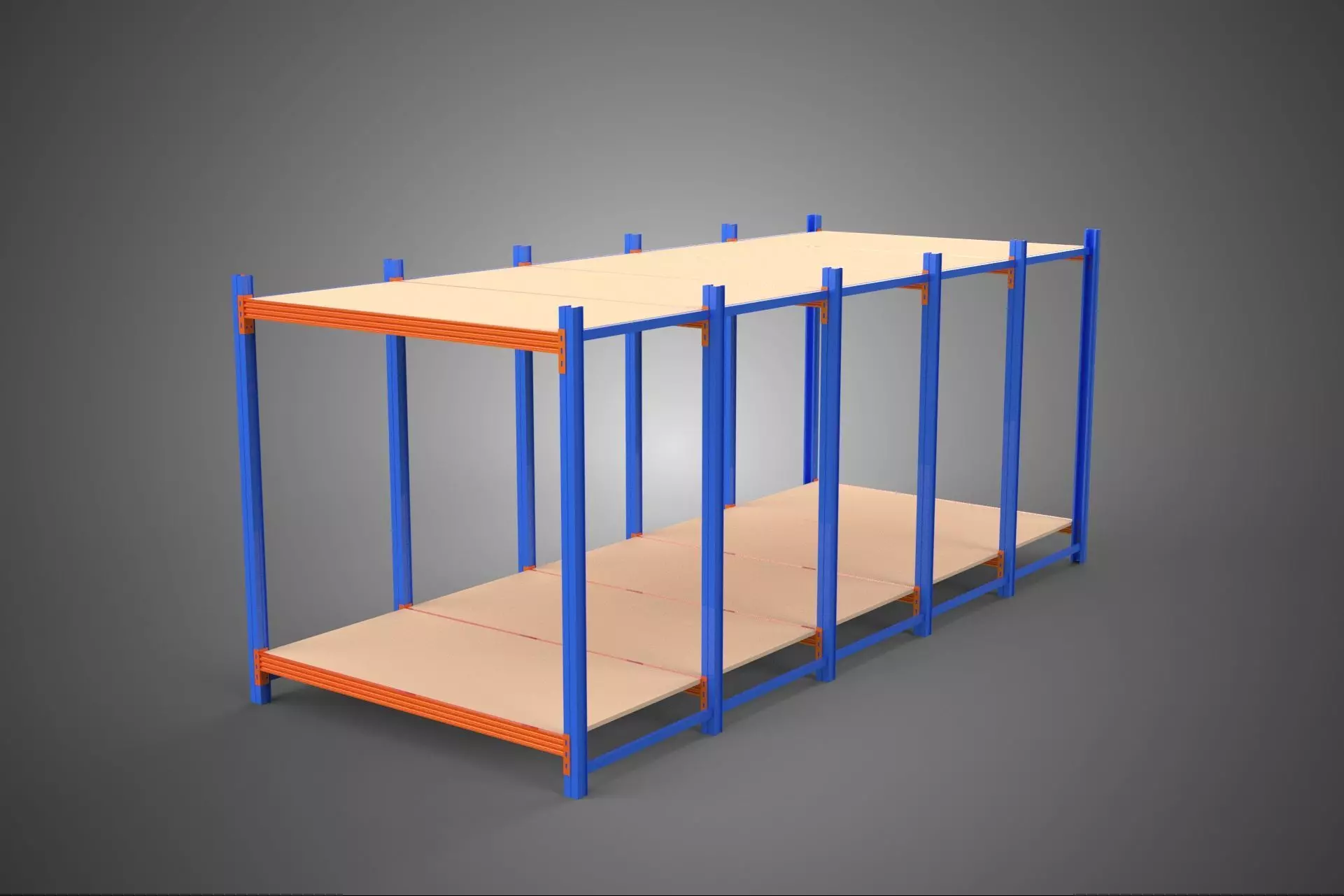
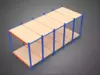
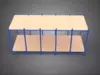
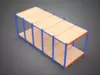
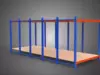
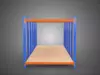
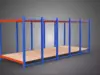
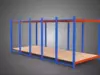
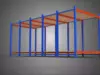
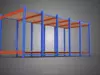
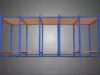
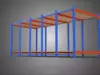
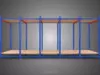
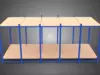
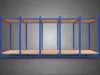
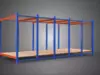
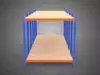
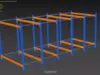
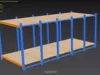
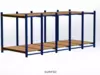
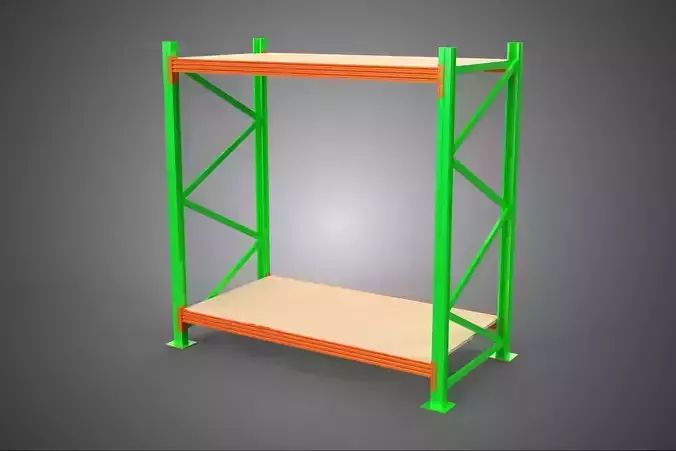
A FRAME HORIZONTAL WOOD METAL WAREHOUSE SHELVING STORAGE RACK TRAY system describes a sophisticated and robust industrial storage solution specifically engineered for the efficient organization and retrieval of goods within large-scale commercial or industrial environments, predominantly warehouses and distribution centers. This multifaceted designation characterizes a structural assembly built upon a primary metallic framework, configured with horizontally oriented shelving units that frequently incorporate wood as a decking material, and often integrating or accommodating individual storage trays for enhanced item containment and categorization.
Purpose and Application:
The fundamental purpose of such a system is to maximize storage density, facilitate orderly inventory management, and streamline operational workflows. It is designed to support a diverse range of items, from bulk packaged goods and palletized loads (when configured appropriately) to smaller components, enabling quick visual identification and accessible retrieval. Typical applications span distribution centers, manufacturing facilities, retail backrooms, logistics hubs, and archives where the systematic organization of varied stock keeping units (SKUs) is paramount. The design addresses the critical industrial need for durable, high-capacity storage capable of withstanding the rigors of frequent use and heavy loads.
Construction Materials:
The WOOD METAL aspect signifies a hybrid material approach, strategically leveraging the distinct advantages of each.
- Metal (Frame): The foundational structural integrity and primary load-bearing capacity are conferred by a robust metal frame, typically constructed from high-strength steel (e.g., cold-rolled steel, structural steel). Key components include vertical upright frames (composed of two columns and diagonal/horizontal bracing), horizontal load beams, and various connectors. Metal provides a superior strength-to-weight ratio, exceptional durability, resistance to impact, and often, modularity, which allows for adjustability, expansion, and reconfiguration. Common finishes, such as powder coating or galvanization, are applied to enhance corrosion resistance and aesthetic appeal.
- Wood (Shelving/Tray Components): Wood, frequently in the form of engineered wood products like particle board, plywood, or MDF, or solid timber planks, is a common material for the actual shelving surfaces or decking. This material choice offers a cost-effective, relatively lightweight, and easily replaceable decking option. It provides a solid, flat, and often non-marring surface suitable for a wide variety of stored items, and can absorb certain impacts without compromising the underlying metal support structure. In some configurations, wooden components might also form the body of the trays themselves, particularly for specialized or aesthetically driven applications.
Structural Components and Orientation:
- Frame: The core is a rigid, self-supporting or anchored skeletal structure, typically comprising vertical uprights that define the height and depth, and horizontal load-bearing beams that slot into the uprights.
- Horizontal Shelving: The horizontal descriptor emphasizes that the storage surfaces are arranged in tiers parallel to the ground. These shelves are supported by the metal beams, which are typically adjustable along the height of the uprights. This configuration facilitates ergonomic loading and unloading of items from the front, making it suitable for manual picking, forklift access, or automated retrieval systems depending on the system's overall height and specific design.
- Shelving Units: These are the flat surfaces upon which inventory is placed. As noted, they are commonly wooden panels, but can also be metal mesh, wire decking, or solid steel, resting upon or integrated into the horizontal metal beams.
Tray System Integration:
The term TRAY is pivotal, referring to a specialized element that enhances the system's organizational capabilities and containment. It can manifest in several ways:
- Integrated Shelving Trays: Some systems feature shelves designed with raised lips or edges along their perimeter, effectively forming a shallow, self-contained tray. This design is highly beneficial for preventing items from rolling, sliding, or falling off the shelf, providing secure containment, especially for smaller, loose, or irregularly shaped goods.
- Modular Storage Trays: More commonly, tray refers to individual, often removable, containers (made from plastic, metal, or wood) that are specifically designed to fit onto the horizontal shelves. These trays provide further compartmentalization, enabling granular organization of small parts, components, documents, or inventory requiring precise segregation. They facilitate batch picking, kitting operations, and can be easily transported for staging or assembly. This modular approach significantly enhances the system's versatility, allowing for flexible subdivision within each shelving tier to manage diverse inventory types efficiently.
Key Features and Advantages:
- High Storage Capacity: Optimizes both vertical and horizontal space utilization within a given footprint.
- Durability and Stability: The robust metal frame ensures structural integrity and high load-bearing capability, while wood components offer resilient and often replaceable decking surfaces.
- Versatility: Accommodates a broad spectrum of inventory, from boxed goods and bulk items to loose parts, especially when integrated with modular tray systems.
- Organization and Accessibility: Tiered shelving and optional tray systems promote systematic organization, significantly enhancing retrieval efficiency and reducing search times.
- Adjustability: Many systems feature adjustable beam levels, allowing for customization of shelf heights to suit varying item dimensions and inventory profiles.