High-quality 3D assets at affordable prices — trusted by designers, engineers, and creators worldwide. Made with care to be versatile, accessible, and ready for your pipeline.
Included File Formats
This model is provided in 14 widely supported formats, ensuring maximum compatibility:
• - FBX (.fbx) – Standard format for most 3D software and pipelines
• - OBJ + MTL (.obj, .mtl) – Wavefront format, widely used and compatible
• - STL (.stl) – Exported mesh geometry; may be suitable for 3D printing with adjustments
• - STEP (.step, .stp) – CAD format using NURBS surfaces
• - IGES (.iges, .igs) – Common format for CAD/CAM and engineering workflows (NURBS)
• - SAT (.sat) – ACIS solid model format (NURBS)
• - DAE (.dae) – Collada format for 3D applications and animations
• - glTF (.glb) – Modern, lightweight format for web, AR, and real-time engines
• - 3DS (.3ds) – Legacy format with broad software support
• - 3ds Max (.max) – Provided for 3ds Max users
• - Blender (.blend) – Provided for Blender users
• - SketchUp (.skp) – Compatible with all SketchUp versions
• - AutoCAD (.dwg) – Suitable for technical and architectural workflows
• - Rhino (.3dm) – Provided for Rhino users
Model Info
• - All files are checked and tested for integrity and correct content
• - Geometry uses real-world scale; model resolution varies depending on the product (high or low poly)
• • - Scene setup and mesh structure may vary depending on model complexity
• - Rendered using Luxion KeyShot
• - Affordable price with professional detailing
Buy with confidence. Quality and compatibility guaranteed.
If you have any questions about the file formats, feel free to send us a message — we're happy to assist you!
Sincerely,
SURF3D
Trusted source for professional and affordable 3D models.
More Information About 3D Model :
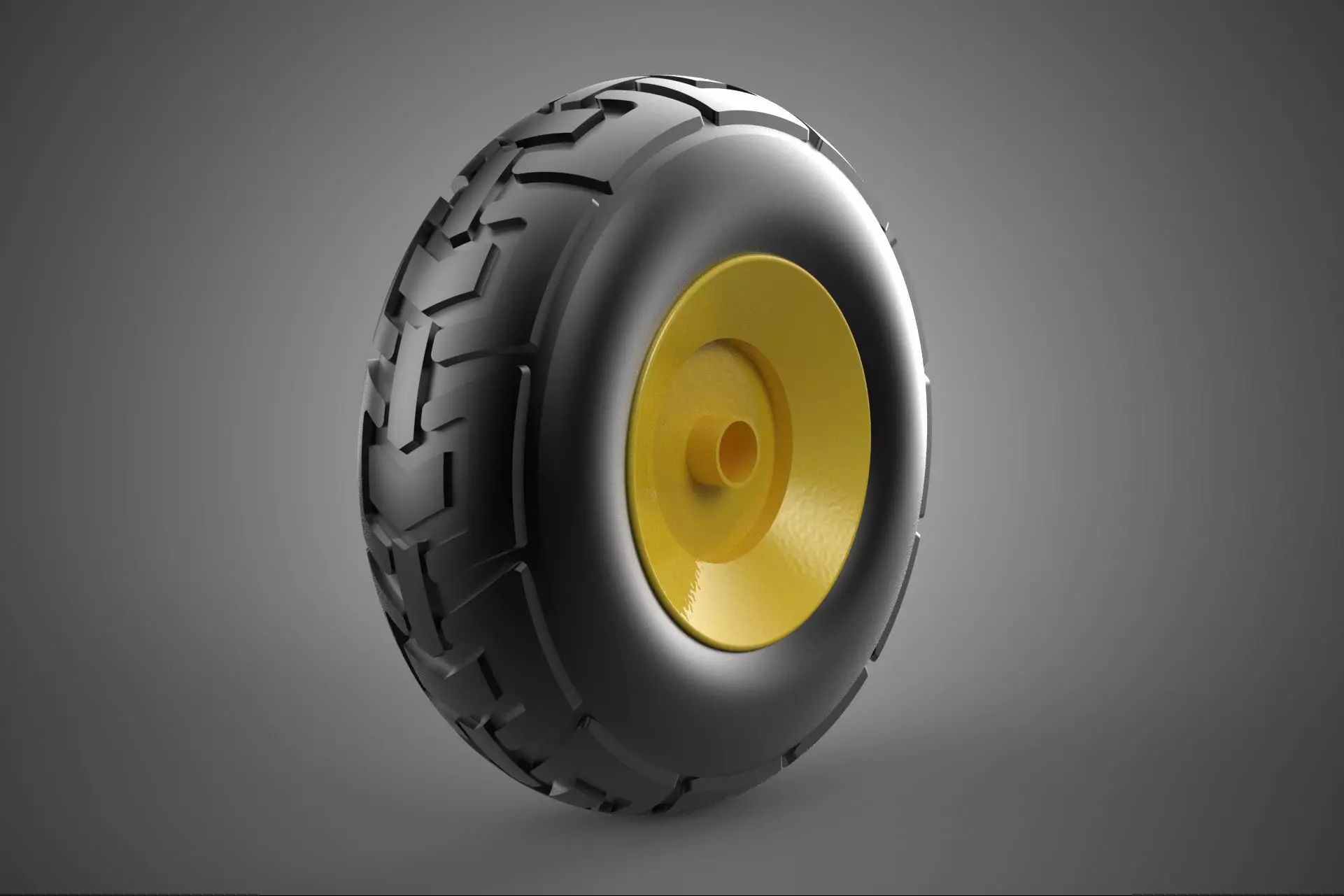
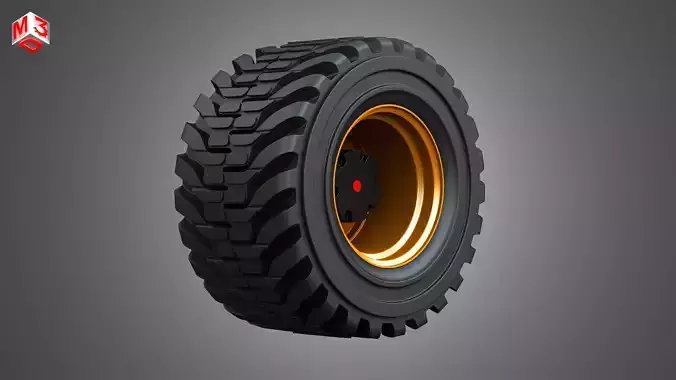
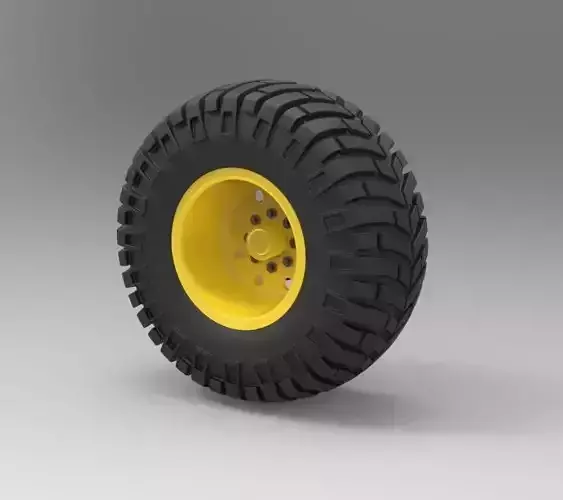
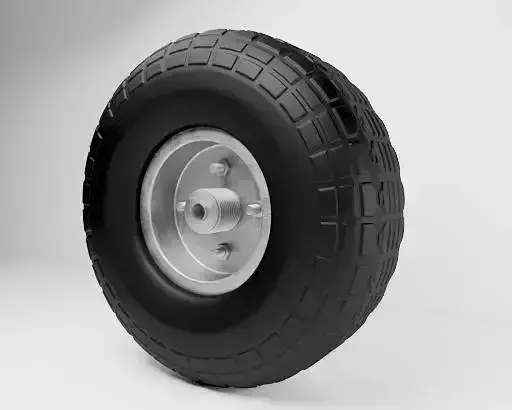
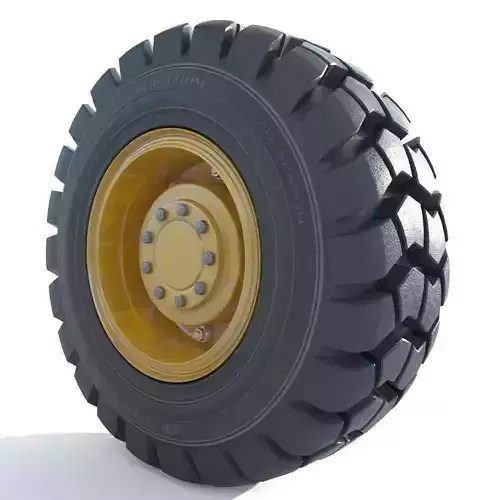
The Yellow Wheel Tread Tire Rim Axle Hub Cart Trolley Barrow Bearing assembly refers to a complete, integrated rolling unit designed for non-motorized conveyance apparatuses, including but not limited to wheelbarrows, utility carts, hand trolleys, and industrial dollies. This system comprises the fundamental components required for transferring vertical loads into horizontal motion while minimizing rolling resistance. The distinct yellow coloration often serves dual purposes: aesthetic differentiation and adherence to industrial safety standards for high visibility.
Component Breakdown and Functionality
1. The Tire, Tread, and Rim:
The Tire is the resilient outer layer, crucial for grip and shock absorption. The corresponding Tread is the sculpted surface pattern designed to maximize traction and wear resistance on various surfaces, ranging from smooth concrete to uneven terrain.
The Rim is the structural cylinder upon which the tire is seated and secured. In this specific configuration, the rim is frequently fabricated from stamped steel, composite plastic, or specialized alloys, prioritizing durability and weight efficiency. The YELLOW designation typically applies to a high-visibility coating or the inherent color of a polyurethane or thermoplastic elastomer (TPE) tire compound, indicating the assembly's intended function or load rating within a specific operational environment.
2. The Hub and Bearing System:
The Hub is the central core of the wheel assembly, responsible for housing the axle connection and the rotational mechanism. The integrity of the hub directly dictates the assembly’s load-bearing capacity.
The Bearing system—a critical mechanical interface—is installed within the hub. Common bearing types utilized in these applications include sealed ball bearings (reducing friction and preventing debris ingress), roller bearings, or precision sleeve/plain bearings. The primary function of the bearing is to facilitate smooth, unimpeded rotation of the wheel around the stationary or rotating Axle, thereby dramatically reducing the manual effort required for movement.
3. The Axle and Chassis Integration:
The Axle is the shaft that passes through the hub, providing the central pivot point. In manual handling equipment, axles are typically non-driven and can be fixed (bolted to the chassis of the cart or trolley) or rotating (allowing the wheel assembly to articulate).
The entire rolling unit interfaces with the chassis structures of various conveyance apparatuses:
-
Cart/Trolley: Refers to multi-wheeled devices (two or four wheels) used for transporting material over relatively smooth surfaces.
-
Barrow: Primarily denotes the wheelbarrow, a single-axle, typically single-wheeled device requiring manual lifting and balancing for operation, often employed in construction and gardening.
### Operational Context and Technical Specifications
Assemblies matching this description are characterized by low operational speeds, high static load capacity relative to their size, and an optimized design for repeated manual usage. They are designed to withstand significant lateral and radial stress while maintaining a low coefficient of rolling resistance. The materials selected—often galvanized steel for rims and axles, and high-density, non-marking rubber or PU for tires—reflect a mandate for durability, weather resistance, and minimal maintenance required in industrial, agricultural, or commercial logistics settings.
KEYWORDS: Wheel assembly, material handling equipment, industrial mobility, pneumatic tire, polyurethane wheel, hub assembly, axle component, radial bearing, wheelbarrow, utility cart, hand trolley, dolly, non-motorized transport, load capacity, friction reduction, yellow safety color, rim structure, tread pattern, rotational dynamics, logistics equipment, chassis component, low speed application, mechanical component, rolling resistance, maintenance-free bearing, construction equipment, industrial caster, component integration, high-visibility equipment, bearing system, cart wheel.