High-quality 3D assets at affordable prices — trusted by designers, engineers, and creators worldwide. Made with care to be versatile, accessible, and ready for your pipeline.
Included File Formats
This model is provided in 14 widely supported formats, ensuring maximum compatibility:
• - FBX (.fbx) – Standard format for most 3D software and pipelines
• - OBJ + MTL (.obj, .mtl) – Wavefront format, widely used and compatible
• - STL (.stl) – Exported mesh geometry; may be suitable for 3D printing with adjustments
• - STEP (.step, .stp) – CAD format using NURBS surfaces
• - IGES (.iges, .igs) – Common format for CAD/CAM and engineering workflows (NURBS)
• - SAT (.sat) – ACIS solid model format (NURBS)
• - DAE (.dae) – Collada format for 3D applications and animations
• - glTF (.glb) – Modern, lightweight format for web, AR, and real-time engines
• - 3DS (.3ds) – Legacy format with broad software support
• - 3ds Max (.max) – Provided for 3ds Max users
• - Blender (.blend) – Provided for Blender users
• - SketchUp (.skp) – Compatible with all SketchUp versions
• - AutoCAD (.dwg) – Suitable for technical and architectural workflows
• - Rhino (.3dm) – Provided for Rhino users
Model Info
• - All files are checked and tested for integrity and correct content
• - Geometry uses real-world scale; model resolution varies depending on the product (high or low poly)
• • - Scene setup and mesh structure may vary depending on model complexity
• - Rendered using Luxion KeyShot
• - Affordable price with professional detailing
Buy with confidence. Quality and compatibility guaranteed.
If you have any questions about the file formats, feel free to send us a message — we're happy to assist you!
Sincerely,
SURF3D
Trusted source for professional and affordable 3D models.
More Information About 3D Model :
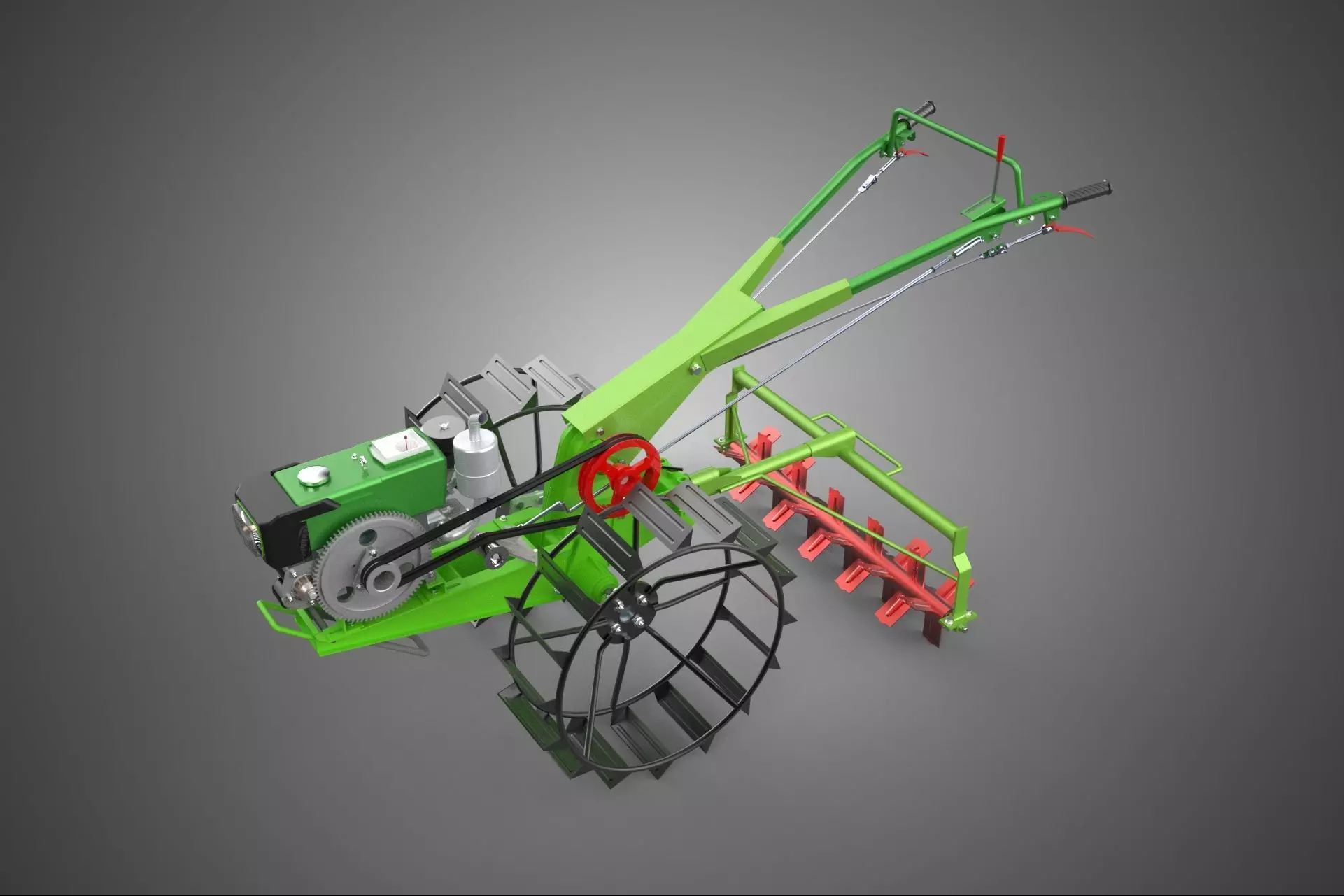
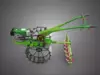
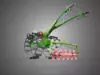
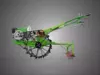
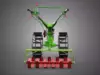
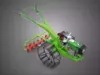
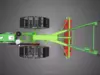
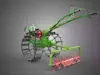
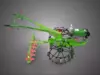
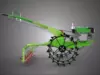
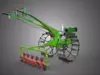
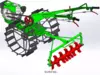
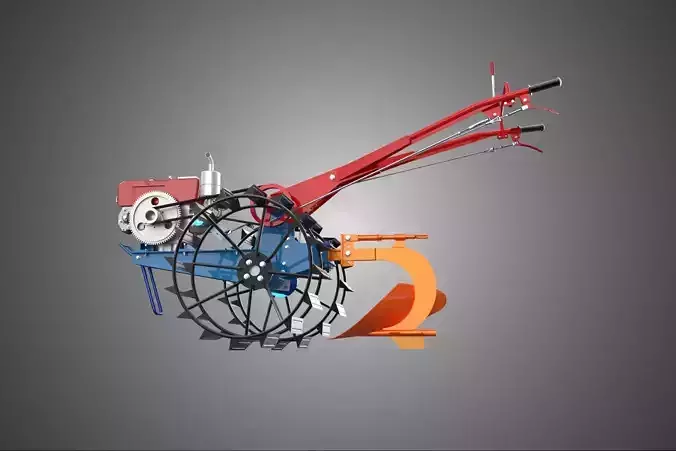
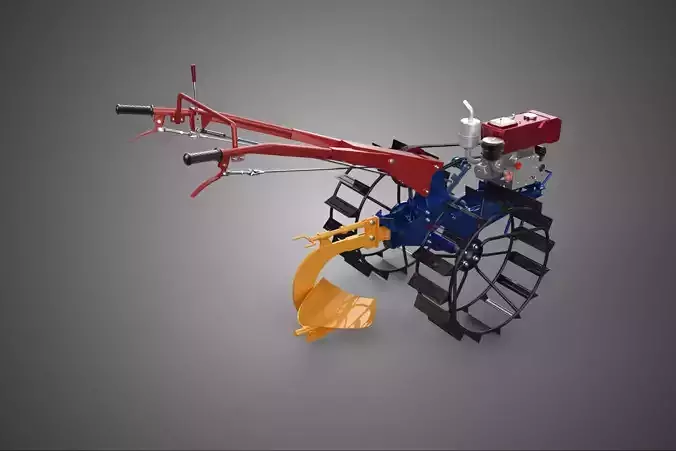
Mini Tractor, Power Tiller, and Rotary Cultivation Systems (Diesel-Powered)
The terminology Mini Tractor Roto Rotary Rotavator Diesel Cultivator Tiller Plow collectively describes a class of highly versatile, compact agricultural machinery primarily characterized by the use of a diesel engine to power both locomotion and soil preparation implements. These machines are known variously as Power Tillers, Walking Tractors, Two-Wheel Tractors, or sometimes, incorrectly, as sub-compact four-wheel tractors, depending on their precise configuration. Their operational function centers on mechanizing fundamental agricultural tasks, particularly tillage and cultivation, on plots too small or complex for standard agricultural tractors.
Nomenclature and Definition
The central power unit is generally referred to as a Power Tiller or Mini Tractor. These units are distinguished by their compact footprint, robust build, and an engine output typically ranging from 5 to 20 horsepower (3.7 to 14.9 kW). The inclusion of Diesel emphasizes the prevalence of highly fuel-efficient, single-cylinder, direct-injection compression-ignition engines utilized in these systems, particularly common in market applications requiring high torque at low speeds.
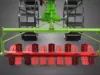
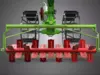
The terms Rotavator, Rotary, and Roto refer specifically to the primary implement used for secondary tillage. A Rotavator is a motorized implement that uses rapidly rotating blades (tines) attached to a horizontal shaft to aggressively break up, aerate, and pulverize the soil, creating a fine seedbed. This action often combines the functions traditionally separated into plowing (primary tillage) and harrowing (secondary tillage).
The terms Cultivator and Tiller are functional descriptions. A cultivator typically manages weed control and surface aeration after planting, while a tiller, in common usage, refers to the combination of the power unit and the rotary attachment used for deeper soil turning. The inclusion of Plow denotes the capacity of these machines to perform primary tillage (deeper soil inversion) when equipped with specialized moldboard or disc plow attachments, utilizing the machine's Power Take-Off (PTO) system.
Technical Configuration
1. Power Unit (The Tiller/Tractor Body):
The core unit consists of the diesel engine, a multi-speed transmission (typically featuring several forward speeds, a reverse gear, and a high/low range selector), and a differential mechanism (often lockable). Crucially, the machine features handlebars or control levers, allowing the operator to walk behind the unit—hence the common term walking tractor. The engine cooling is often achieved via water-cooling systems in higher-powered models, enhancing durability during prolonged operation.
2. Drive System and PTO:
The power unit employs large, pneumatically-tired wheels for traction, which are disconnectable or removable when operating in tillage mode (where the rotavator attachment itself provides propulsion and stability). Power transmission to external implements is facilitated by a standardized Power Take-Off (PTO) shaft, typically located at the rear or side of the main housing, enabling interchangeability with various tools.
3. The Rotavator Implement:
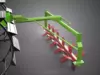
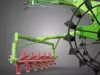
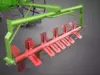
The Rotavator is a high-speed assembly attached via a three-point hitch or a direct coupling. It consists of a gearbox driving the rotor shaft, onto which specialized L-shaped or C-shaped tines are bolted. The depth of tillage is controlled by an adjustable skid shoe or a gauge wheel, ensuring consistent soil penetration. The aggressive action of the rotavator blades thoroughly mixes organic matter and crop residues into the soil profile.
Operational Modes and Applications
Mini tractors and power tillers are highly valued in agriculture due to their efficiency in restrictive environments:
- Smallholding and Subsistence Farming: They are the backbone of mechanization in regions where field sizes are small (e.g., less than 5 hectares) or highly fragmented, such as in much of Southeast Asia, India, and China.
- Horticulture and Specialty Crops: Their narrow width and tight turning radius make them ideal for inter-row cultivation in vineyards, orchards, and market garden beds.
- Tillage Depth and Type:
- Rotary Tillage: Primary function; used for seedbed preparation, often reaching depths of 15–25 cm.
- Plowing: Utilized for deeper soil inversion (primary tillage) to bury weeds and residue, requiring sufficient weight distribution or specialized wheel weighting.
- Auxiliary Tasks: Through the PTO, these units can drive water pumps, threshers, generating dynamos, and trailer hitches for transport functions.
### Advantages
Compared to full-sized agricultural tractors, the diesel power tiller offers several key advantages: lower initial capital investment, significantly reduced fuel consumption per hour, high maneuverability in restricted spaces, and adaptability to terraced or steep terrain where larger equipment is impractical. These machines facilitate the transition from manual labor to partial mechanization, dramatically improving productivity for small-scale farmers.
KEYWORDS: Mini tractor, power tiller, rotavator, diesel engine, cultivator, walking tractor, two-wheel tractor, tillage, cultivation, plow, horticulture, small farm, agriculture, sub-compact, PTO shaft, single-cylinder, direct injection, compact machinery, seedbed preparation, maneuverability, transmission, gearbox, engine, draft power, soil preparation, diesel cultivator, rotary tiller, farm equipment, farming implements.