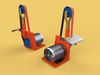
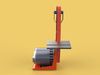
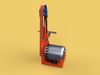


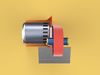
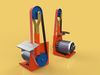
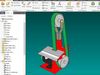
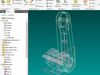
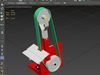
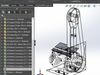
DESCRIPTION
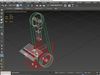
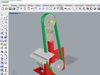
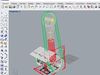
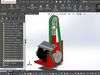
  • Modeled and Textured in Autodesk Inventor. The model contains the most popular formats:
  1. Autodesk Inventor *.ipt *.iam *.ipn *.idw *.dwg (NATIVE)
  2. SolidWorks: *.sldprt *.slddrw *.sldasm
  3. 3DS MAX: *.max
  4. Rhinoceros: *.3dm
  5. SketchUp: *.skp
  6. Blender: *.blend
  7. AutoCAD: *.dwg
  8. Collada file type: *.dae
  9. Stereolithography: *.stl
  10. Lightwave: *.lwo
  11. ACIS: *.sat (NURBS)
  12. IGES: *.iges *.igs (NURBS)
  13. STEP: *.step *.stp (NURBS)
  14. 3DS MAX all ver.: *.3ds (Multi Format)
  15. Wavefront OBJ: *.obj *.mtl (Multi Format)
  16. FBX: *.fbx (Multi Format)
  • Each file was checked for opening and full content by the model.
  • The 3D model was created on real base. It’s created accurately, in real units of measurement, qualitatively and maximally close to the original.
  • Renders Are made in Luxion Keyshot
  • “WE PROVIDE 3D MODEL CHEAP PRICE BUT WITH GOOD QUALITY”
  • If you need any other formats we are more than happy to make them for you. Contact me for any question :)

Sincerely Your, SURF3D

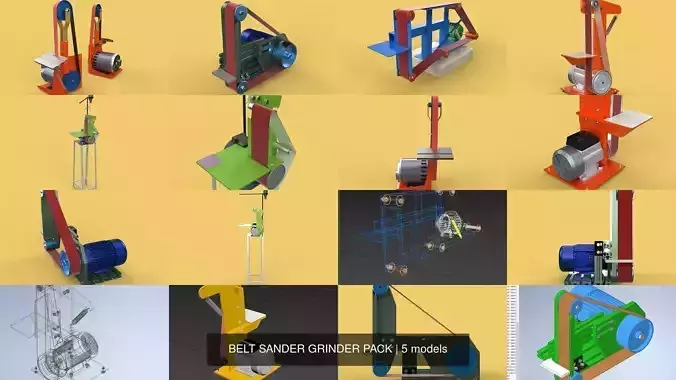
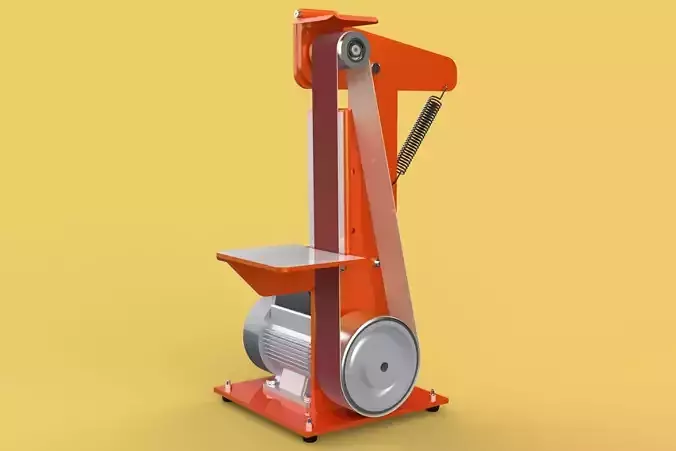
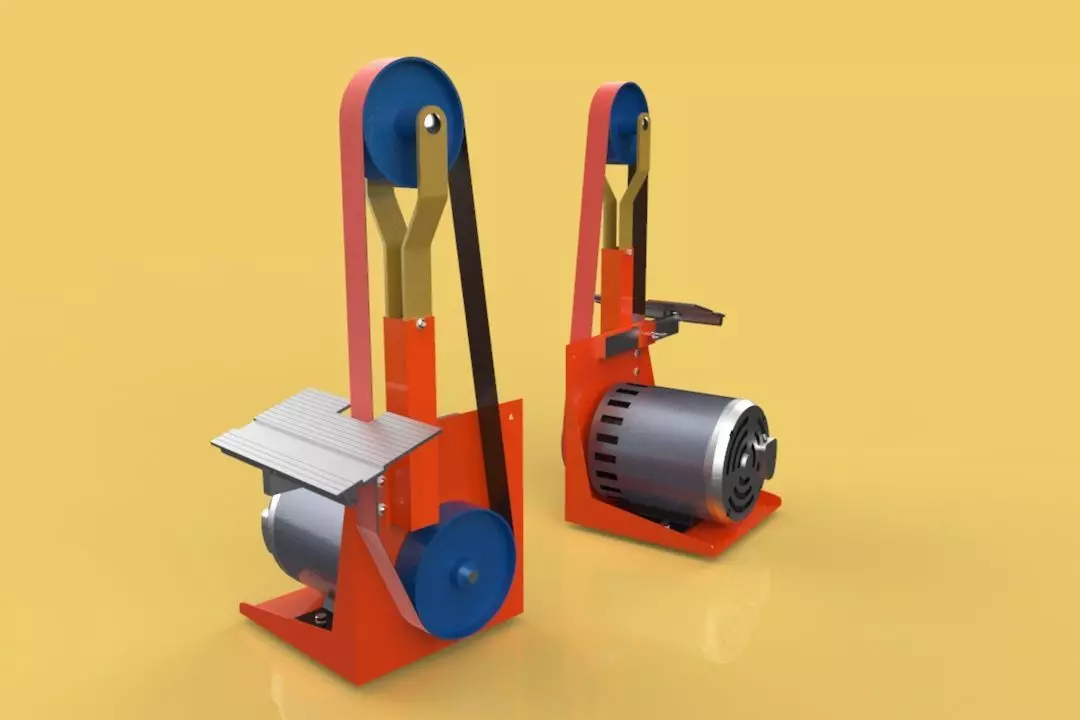
MORE INFORMATION ABOUT 3D MODELS :Belt grinding is an abrasive machining process used on metals and other materials. It is typically used as a finishing process in industry. A belt, coated in abrasive material, is run over the surface to be processed in order to remove material or produce the desired finish.[1][2]Belt grinding is a versatile process suitable for all kinds of different applications. There are three different applications of the belt grinding technology:[3]

Finishing: surface roughness, removal of micro burrs, cosmetic finishes, polishingDeburring: radiusing, burr removal, edge breakingStock removal: high stock removal, cleaning (e.g. of corrosion), eliminating mill or tool marks, dimensioningA belt sander or strip sander is a sander used in shaping and finishing wood and other materials.[1] It consists of an electric motor that turns a pair of drums on which a continuous loop of sandpaper is mounted. Belt sanders may be handheld and moved over the material, or stationary (fixed), where the material is moved to the sanding belt. Stationary belt sanders are sometimes mounted on a work bench, in which case they are called bench sanders. Stationary belt sanders are often combined with a disc sander.

Belt sanders can have a very aggressive action on wood and are normally used only for the beginning stages of the sanding process, or used to rapidly remove material. Sometimes they are also used for removing paints or finishes from wood. Fitted with fine grit sand paper, a belt sander can be used to achieve a completely smooth surface.

Stationary belt sanders are used for removing non-ferrous metals, such as aluminum. Non-ferrous metals tend to clog grinding wheels, quickly making them useless for grinding soft metals. Because the small grooves in the sandpaper are opened up as they go around the arc of the drive wheel, belt sanders are less prone to clogging.

Belt sanders can vary in size from the small handheld unit shown in the illustration to units wide enough to sand a full 1.2 by 2.5 m (4-by-8 foot sheet) of plywood in a manufacturing plant. Some belt sanders can be as large as 1.2 by 0.7 metres (3 ft 11 in × 2 ft 4 in). Sanding wood produces a large amount of sawdust. Therefore, belt sanders employed in woodworking are usually equipped with some type of dust collection system. It may be as simple as a cloth filter bag attached to a portable sander or a large vacuum system to suck dust particles away into a central collector.

Taut-belt sanders allow for adjusting the angle of the idler drum to keep the belt centered.[2] Slack-belt sanding is commonly used in the manufacturing process of guitars and other medium-sized wooden objects. It employs a long sanding belt which runs slackly over the object. The machinist then exerts pressure to it to sand down specific areas.

REVIEWS & COMMENTS

See what other buyers think about this model - real feedback on quality,
accuracy, and usability.
View all
0
0
2
Robinson17
Robinson17Community member
This user is part of the CGTrader community
Great work.....
BEST PRICE GUARANTEED
Found this model cheaper on another marketplace? Let our support team know - we’ll match it.

BELT GRINDER SANDER BUFFER EDGE POLISHING MACHINE 3D model

Royalty Free License
Hire
Like this model to show appreciation to the designer.
See how many times this model was viewed.
Share this model to support the designer and boost their visibility.
Native file format
IAM
Size: 1.5 MB
Exchange formats
BLEND
Blender<br />File Size: 4.1 MB
OBJ
OBJ | 2 files<br />File Size: 2.69 MB
FBX
Autodesk FBX<br />File Size: 992 KB
MAX
Autodesk 3ds Max<br />File Size: 5.85 MB
STL
Stereolithography<br />File Size: 1.46 MB
STP
STEP<br />File Size: 1020 KB
SLDPRT
SolidWorks<br />File Size: 3.48 MB
3DS
3D Studio<br />File Size: 695 KB
DAE
Collada<br />File Size: 5.04 MB
LWO
Lightwave<br />File Size: 1.74 MB
SAT
3D ACIS<br />File Size: 2.46 MB
DWG
AutoCAD<br />File Size: 671 KB
SKP
Sketchup<br />File Size: 8.02 MB
IGE
IGES<br />File Size: 4.71 MB
3DM
Rhinoceros 3D<br />File Size: 2.82 MB
Verified by CGTrader
Verified models are of higher quality as they have
passed CGT Standard technical and visual checks,
making them more professional-grade 3D assets.
Learn more.
FBX
This FBX file has successfully passed the CGT Standard technical and visual checks. The verification results are detailed in the section below.
File & scene
Binary FBX
Binary FBX file is more compact and faster to load and process.
Learn more
No unsupported objects
Unsupported objects:
- Lights
- Cameras
Learn more
Geometry
No N-gons
N-gons are polygons with five or more sides which might cause issues in certain processes like rendering or animation. Learn more
No faceted geometry
Faceted geometry uses flat surfaces without smoothing, which can look unrealistic on curves.
Learn more
Manifold geometry
Manifold geometry ensures all surfaces are properly connected, avoiding issues like edges shared by more than two faces.
Learn more
Textures & material
PBR textures
PBR textures simulate how light interacts with materials, making the model look realistic under different lighting.
Required PBR textures:
- Base Color
- Roughness
- Metalness
- Normal
Learn more
No embed textures
Embedded textures are stored inside the model file, increasing its size and sometimes causing compatibility issues.
Learn more
Square textures
Texture aspect ratio is the width-to-height ratio of a texture. Expected texture aspect ratio: 1:1
Learn more
Power of 2 texture sizes
Textures with dimensions in power of two (e.g. 512x512px, 1024x1024px) are used to optimize performance and memory usage.
Learn more
Assigned materials
Materials are applied to the 3D model to allow visualize a model's surface properties and appearance.
Learn more
UVs & naming
No UV overlaps
UVs overlap when multiple points on the 3D model's surface are mapped to the same point on the UV island causing texture stretching.
Learn more
UV unwrapped model
A UV unwrapped model means its 3D surface is flattened into 2D space, allowing textures to be applied accurately.
Learn more
Allowed characters
Allowed ASCII characters: a-zA-Z0-9-_
Learn more
Provided by designer
Information and details shared directly by the model's designer.
3D Features
The model includes animations (movement or actions) that can be played in supported software or engines.
The model has a skeleton or bone structure, making it ready for posing or animation.
PBR
Uses Physically Based Rendering materials, which give the model realistic lighting and surface properties.
Textures
The model includes image files (textures) that add color, patterns, or detail to its surfaces.
Materials
The model has material settings that define how surfaces look (color, shine, transparency, etc.).
UV Mapping
The model's surfaces are mapped to a 2D image, allowing textures to display correctly.
Plugins Used
Some external plugins were used to create the model. These may be required for full functionality.
3D printing
Indicates whether the designer marked this model as suitable for 3D printing.
Model is not 3D printable
The designer indicates this model is intended for digital use only (rendering, animation, or AR/VR) and not for 3D printing.
Geometry
Other
The model uses a different geometry type (e.g., voxels, point cloud).
30536 polygons
The total number of polygons (flat shapes) that make up the 3D model.
/ 30134 vertices
The number of points (corners) that define the shape of the model's polygons.
Unwrapped UVs
Publish date
Model ID
Chat