High-quality 3D assets at affordable prices — trusted by designers, engineers, and creators worldwide. Made with care to be versatile, accessible, and ready for your pipeline.
Included File Formats
This model is provided in 14 widely supported formats, ensuring maximum compatibility:
• - FBX (.fbx) – Standard format for most 3D software and pipelines
• - OBJ + MTL (.obj, .mtl) – Wavefront format, widely used and compatible
• - STL (.stl) – Exported mesh geometry; may be suitable for 3D printing with adjustments
• - STEP (.step, .stp) – CAD format using NURBS surfaces
• - IGES (.iges, .igs) – Common format for CAD/CAM and engineering workflows (NURBS)
• - SAT (.sat) – ACIS solid model format (NURBS)
• - DAE (.dae) – Collada format for 3D applications and animations
• - glTF (.glb) – Modern, lightweight format for web, AR, and real-time engines
• - 3DS (.3ds) – Legacy format with broad software support
• - 3ds Max (.max) – Provided for 3ds Max users
• - Blender (.blend) – Provided for Blender users
• - SketchUp (.skp) – Compatible with all SketchUp versions
• - AutoCAD (.dwg) – Suitable for technical and architectural workflows
• - Rhino (.3dm) – Provided for Rhino users
Model Info
• - All files are checked and tested for integrity and correct content
• - Geometry uses real-world scale; model resolution varies depending on the product (high or low poly)
• • - Scene setup and mesh structure may vary depending on model complexity
• - Rendered using Luxion KeyShot
• - Affordable price with professional detailing
Buy with confidence. Quality and compatibility guaranteed.
If you have any questions about the file formats, feel free to send us a message — we're happy to assist you!
Sincerely,
SURF3D
Trusted source for professional and affordable 3D models.
More Information About 3D Model :
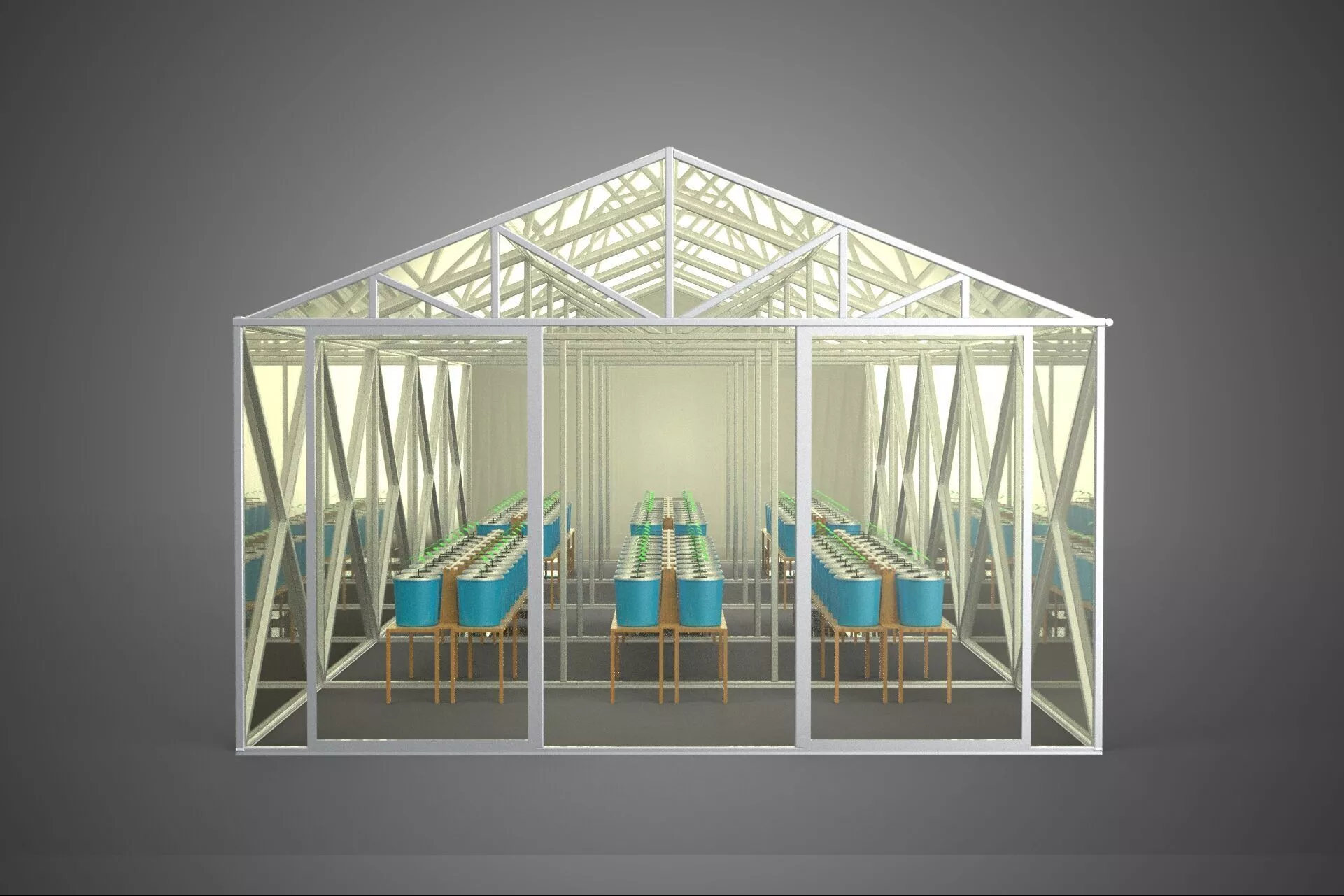
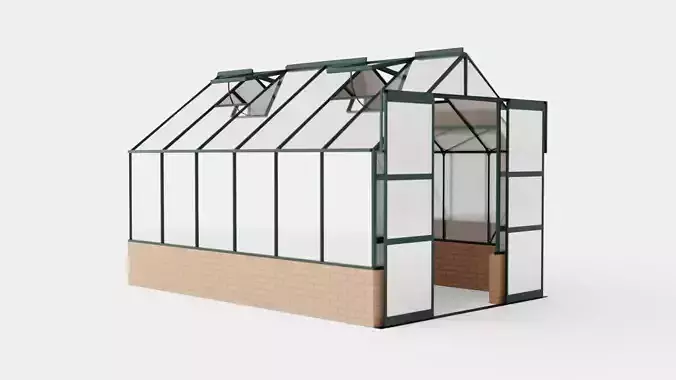
The Greenhouse Dutch Bucket Hydroponic Aeroponic System represents an advanced methodology within Controlled Environment Agriculture (CEA), integrating specific soil-less cultivation techniques (hydroponics and aeroponics) within an optimized protective structure (the greenhouse) to maximize crop yield and resource efficiency. This complex infrastructure is designed primarily for intensive commercial production, particularly of high-value or long-duration crops.
I. System Definition and Integration
The primary feature of this system is the integration of high-density cultivation methods—specifically the Dutch Bucket technique, often paired with or complemented by aeroponic propagation or modules—all operating under the controlled atmospheric conditions of a greenhouse environment.
A. The Greenhouse Environment
The greenhouse component provides essential climate regulation, insulating the crops from external environmental fluctuations. This structure allows for precise management of critical growth parameters, including temperature, relative humidity (RH), and CO2 concentration (often achieved through CO2 enrichment). Furthermore, the greenhouse maximizes the utilization of Photosynthetically Active Radiation (PAR) while mitigating pest and disease pressure compared to open-field farming. Automated environmental control systems utilize sensors and computerized logic to maintain optimal Vapor Pressure Deficit (VPD) for transpiration efficiency.
II. Hydroponic Component: The Dutch Bucket System
The Dutch Bucket system, also known as the Bato Bucket system, is a closed-loop, recirculating hydroponic technique highly favored for indeterminate crops, such as tomatoes, cucumbers, peppers, eggplant, and melons.
A. Structure and Operation
Each Dutch Bucket is a small container, typically holding 10 to 12 liters of inert growing medium (e.g., perlite, coco coir, or rockwool cubes). Plants are grown individually or in small clusters within these buckets.
- Irrigation: A nutrient solution, held in a central reservoir, is pumped via drip lines to the top of each bucket, delivering controlled doses to the root zone multiple times per day.
- Recirculation: Unlike non-recirculating systems (run-to-waste), Dutch Buckets employ a passive siphon or elbow drain at the base of the bucket. This drain maintains a small, shallow reservoir of solution at the bottom (preventing the media from completely drying out) while allowing excess solution to drain back into a shared return line.
- Nutrient Management: The spent solution is returned to the central reservoir, filtered, and then tested for Electrical Conductivity (EC) and pH. Based on sensor readings, fresh water and concentrated stock nutrients are automatically injected to adjust the solution back to the established set points before the next irrigation cycle. This recirculation minimizes water and nutrient consumption.
### III. The Aeroponic Component
Aeroponics is a method of soil-less cultivation where plant roots are suspended in air or a misting chamber and are periodically sprayed with an atomized nutrient solution. While Dutch Buckets provide high yield for mature crops, aeroponics offers distinct advantages, often utilized in this integrated system for specific purposes.
#### A. Applications and Mechanism
Aeroponic modules, generally involving high-pressure (HPA) or low-pressure (LPA) misting nozzles, are often implemented for high-rate propagation (cloning or germination) due to the superior oxygenation capabilities in the root zone (Arid Root Zone, ARZ). This high level of dissolved oxygen accelerates root development and decreases rooting time before seedlings are transplanted into the Dutch Buckets. In certain high-value operations, full-cycle aeroponic cultivation may run parallel to the Dutch Bucket array, targeting maximum nutrient uptake efficiency.
### IV. Operational Advantages and System Synergy
The synergy between the controlled greenhouse environment and the soil-less techniques yields substantial operational benefits:
- Water and Fertilizer Efficiency: The recirculating nature of the Dutch Bucket system drastically reduces water waste compared to traditional agriculture, typically using 70–90% less water.
- Yield Maximization: Precise delivery of nutrients tailored to the specific phenological stage of the plant, combined with climate optimization, leads to higher yields per square meter and shortened grow cycles.
- Disease Control: By utilizing sterile media and separating the plants in individual buckets, the spread of root diseases (such as Pythium or Fusarium) is minimized compared to deep water culture (DWC) or shared substrate systems.
- Flexibility: The system design allows growers to easily remove diseased or spent individual buckets without disrupting the rest of the grow operation.
In summary, the Greenhouse Dutch Bucket Hydroponic Aeroponic System is a robust and modular CEA framework characterized by efficient closed-loop resource management and high-density planting, enabling reliable, year-round production of high-quality horticultural products.
KEYWORDS: Controlled Environment Agriculture, CEA, Hydroponics, Aeroponics, Dutch Bucket, Bato Bucket, Recirculating System, Greenhouse, Soil-less Cultivation, Perlite, Coco Coir, Nutrient Film Technique, Drip Irrigation, EC Management, pH Control, VPD, Water Efficiency, Crop Yield, Indeterminate Crops, Tomatoes, Cucumbers, Propagation, Root Zone Oxygenation, Plant Physiology, Environmental Control, High Pressure Aeroponics, HPA, Closed-Loop System, Substrate, Fertigation, Automation.