DESCRIPTION

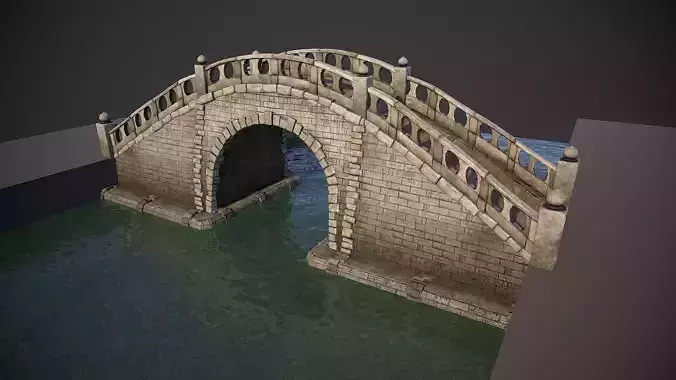
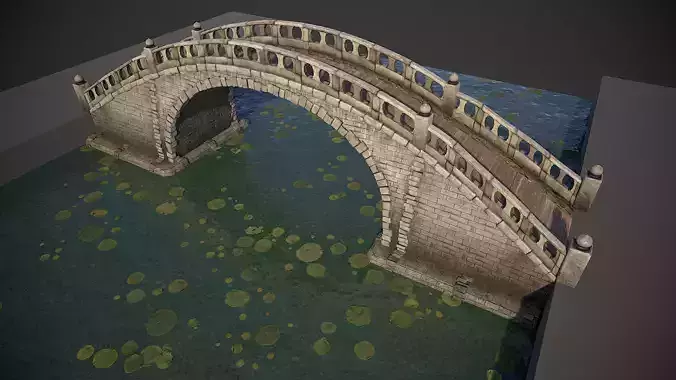
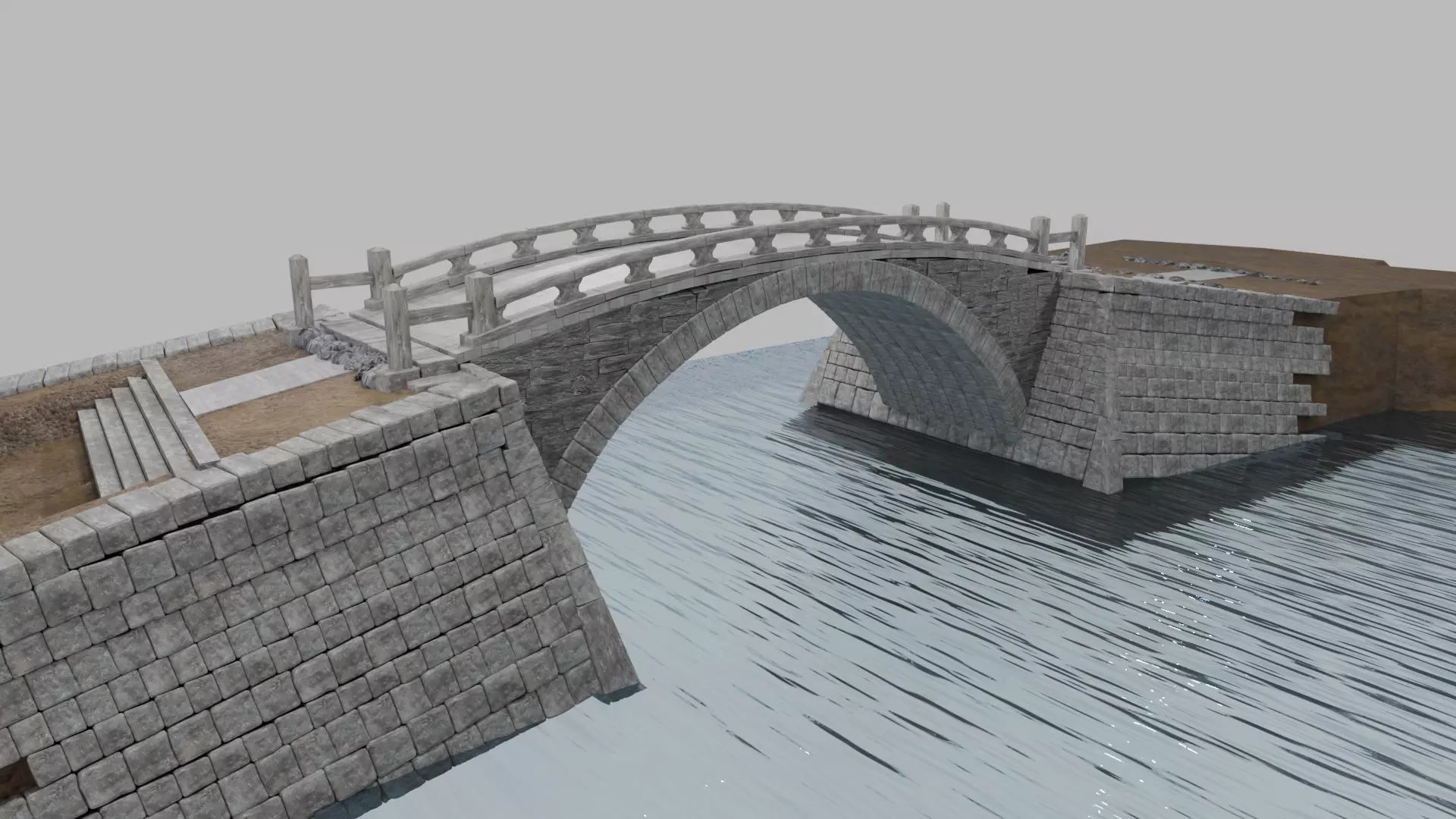
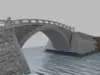
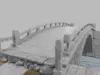
The Saiwai Bridge (幸橋, Saiwaibashi) is a nationally designated Important Cultural Property: a stone single‑arch bridge built in 1702, notable for its flattened arch and historical ties to Hirado’s foreign trade era.

OverviewSaiwaibashi spans the Kagamigawa near Hirado Castle in Nagasaki Prefecture and is officially listed as a National Important Cultural Property. The present stone bridge dates to Genroku 15 (1702) and replaced an earlier wooden crossing; it measures 19.8 m in length and 5.2 m in width, and is characterized by a single, relatively flat stone arch with high balustrades.

Historical contextThe bridge’s origin is tied to the needs of Hirado as a thriving port in the early modern period. A wooden bridge first built in 1669 eased local transport, and the stone replacement was commissioned by the Matsura domain in 1702. Because the stonework is said to have drawn on techniques associated with masons who worked on the Dutch trading post buildings in Hirado, the structure has long been nicknamed the “Dutch Bridge” (Oranda‑bashi) in local tradition.

Architectural and cultural significanceSaiwaibashi is an excellent surviving example of early Edo‑period stone arch engineering in Japan. Its flattened single‑arch form demonstrates advanced stonemasonry for the region and period, reflecting technical exchange and adaptation of masonry skills in a port city engaged with foreign traders. The bridge’s construction and later conservation work make it an important physical record for understanding local building techniques and the cultural landscape of Hirado during its trading heyday.

Stone bridges in Japan — supplementary noteStone bridges occupy a particular place in Japan’s architectural history: while wooden bridges have been predominant for centuries, stone arch bridges began to appear more frequently from the early 17th century onward, often in port towns and urban centers where durability and fire resistance were priorities. Notable stone bridges such as Meganebashi in Nagasaki and later stone reconstructions of major urban crossings illustrate how stonework became a marker of civic pride, technical progress, and international influence during the Edo and subsequent periods.

REVIEWS & COMMENTS

See what other buyers think about this model - real feedback on quality,
accuracy, and usability.
There are no reviews or comments yet. Please be the first one to write it.
BEST PRICE GUARANTEED
Found this model cheaper on another marketplace? Let our support team know - we’ll match it.

Saiwai bashi bridge in Japan 3D model

Royalty Free License
Hire
Like this model to show appreciation to the designer.
See how many times this model was viewed.
Share this model to support the designer and boost their visibility.
Native file format
BLEND
Size: 90 MB
Renderer: Cycles | 4.0.2
Exchange formats
OBJ
OBJ<br />File Size: 46.2 MB
FBX
Autodesk FBX<br />File Size: 21 MB
JPG
JPG<br />File Size: 33 MB
Verified by CGTrader
Verified models are of higher quality as they have
passed CGT Standard technical and visual checks,
making them more professional-grade 3D assets.
Learn more.
FBX
This FBX file has successfully passed the CGT Standard technical and visual checks. The verification results are detailed in the section below.
File & scene
Binary FBX
Binary FBX file is more compact and faster to load and process.
Learn more
No unsupported objects
Unsupported objects:
- Lights
- Cameras
Learn more
Geometry
No N-gons
N-gons are polygons with five or more sides which might cause issues in certain processes like rendering or animation. Learn more
No faceted geometry
Faceted geometry uses flat surfaces without smoothing, which can look unrealistic on curves.
Learn more
Manifold geometry
Manifold geometry ensures all surfaces are properly connected, avoiding issues like edges shared by more than two faces.
Learn more
Textures & material
PBR textures
PBR textures simulate how light interacts with materials, making the model look realistic under different lighting.
Required PBR textures:
- Base Color
- Roughness
- Metalness
- Normal
Learn more
No embed textures
Embedded textures are stored inside the model file, increasing its size and sometimes causing compatibility issues.
Learn more
Square textures
Texture aspect ratio is the width-to-height ratio of a texture. Expected texture aspect ratio: 1:1
Learn more
Power of 2 texture sizes
Textures with dimensions in power of two (e.g. 512x512px, 1024x1024px) are used to optimize performance and memory usage.
Learn more
Assigned materials
Materials are applied to the 3D model to allow visualize a model's surface properties and appearance.
Learn more
UVs & naming
No UV overlaps
UVs overlap when multiple points on the 3D model's surface are mapped to the same point on the UV island causing texture stretching.
Learn more
UV unwrapped model
A UV unwrapped model means its 3D surface is flattened into 2D space, allowing textures to be applied accurately.
Learn more
Allowed characters
Allowed ASCII characters: a-zA-Z0-9-_
Learn more
Provided by designer
Information and details shared directly by the model's designer.
3D Features
Materials
The model has material settings that define how surfaces look (color, shine, transparency, etc.).
Plugins Used
Some external plugins were used to create the model. These may be required for full functionality.
3D printing
Indicates whether the designer marked this model as suitable for 3D printing.
Model is not 3D printable
The designer indicates this model is intended for digital use only (rendering, animation, or AR/VR) and not for 3D printing.
Geometry
Polygon mesh
A model built from polygons (triangles or quads) connected in a mesh.
456184 polygons
The total number of polygons (flat shapes) that make up the 3D model.
/
225925 vertices
The number of points (corners) that define the shape of the model's polygons.
Unwrapped UVs
Publish date
Model ID
Chat