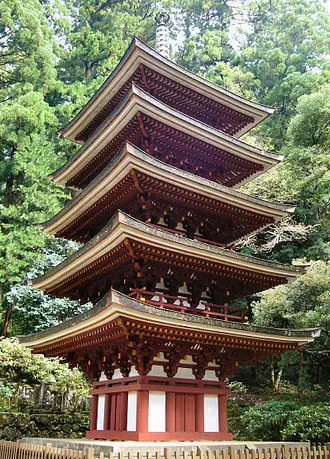
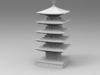
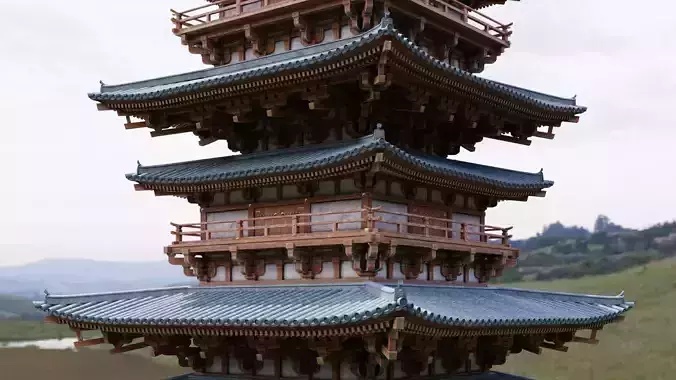
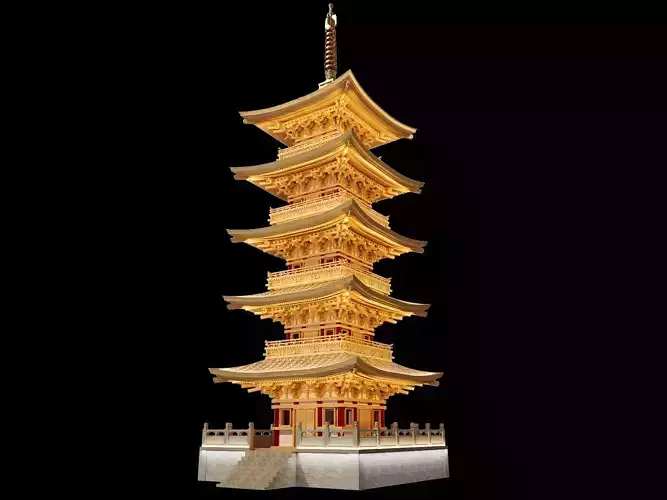
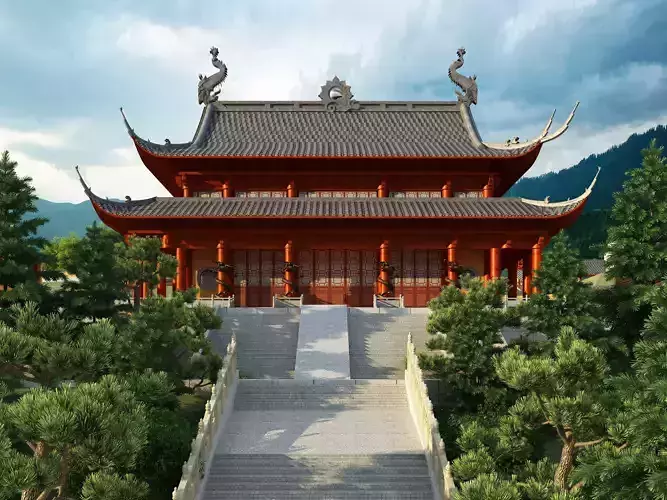
This is a model translated from sketchup community, multiple file formats has been derived.There are two types of fbx one is binary which is easier to open. There are different versions of same file format of this model, it is advised to try all of them. Murō-ji (Japanese: 室生寺) is a Buddhist temple belonging to the Shingon school, located in the city of Uda, Nara Prefecture, Japan. The temple shows typical aspects of Shingon Buddhism, with its buildings laid on the mountainside of Mount Murō (室生山, Murō-san), and historically served as a place of worship for the Japanese dragon Zennyo Ryūō (善如龍王), associated with rain prayers.
Unlike many temples of the time, Murō-ji was opened to females.[1] For that reason, the temple is also called Mount Kōya for women.
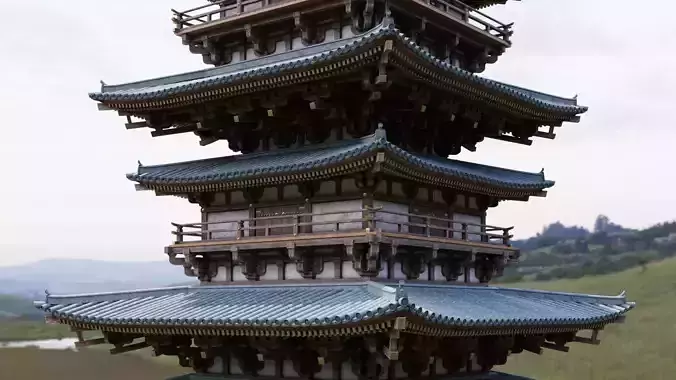
Its five storied pagoda is one of the oldest standing pagodas in Japan, dating its construction to the 9th century.History
While legend has it that the temple was founded by the monk En no Gyōja by order of Emperor Tenmu, and later restored by Kūkai, an extant record kept by the temple, Murō-ji ryaku engi (室生寺略縁起), tells that a successful ritual in respect of a local dragon spirit to cure Prince Yamabe (later Emperor Kanmu)'s illness made the imperial court order a monk from the nearby temple of Kōfuku-ji, named Kenkyō (賢璟), to construct a new temple on the site. The construction of the temple was taken over by a pupil monk Shūen (修円), after Kenkyō's death in 793.[citation needed]
Historically, the temple acted as a place of worship for a Japanese dragon spirit associated with Ryūjin known as Zennyo Ryūō (善如龍王), and rain prayer offerings were traditionally held there. The numerous caves spread around Mount Murō were believed to be carved out by said dragon, and are still considered sacred.[2]
During most of its history, Murō-ji was a subtemple of Kōfuku-ji, from the nearby city of Nara. Monks from Kofuku-ji were regularly sent to Murō-ji for summer prayer retreats, or sanrō (参龍), until its separation in 1694. The Ryūketsu Shrine used to be part of the Murō-ji complex until 1868, as efforts were made to separate Shinto and Buddhist institutions.[2]