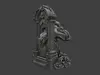
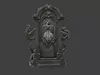
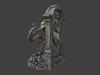
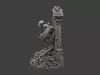
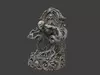
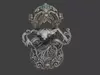
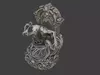
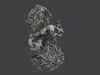
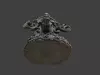
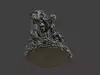
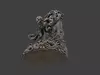
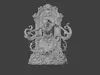
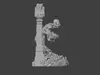
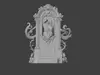
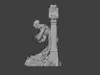
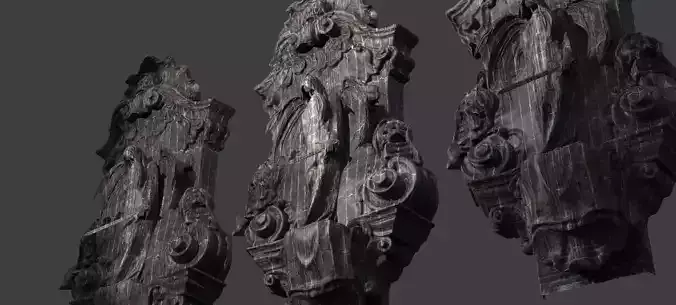
Rootbound Revenant is a haunting dark fantasy sculpture that captures the terrifying moment when an ancient undead entity emerges from a cursed gateway between worlds. Combining gothic architecture, supernatural horror, twisted roots, and skeletal anatomy, this extraordinary model presents a chilling vision of a creature that exists somewhere between spirit, corpse, and nightmare. Designed with exceptional attention to detail, the piece serves as a dramatic centerpiece for fantasy environments, horror-themed collections, game assets, cinematic productions, tabletop campaigns, and dark decorative displays.
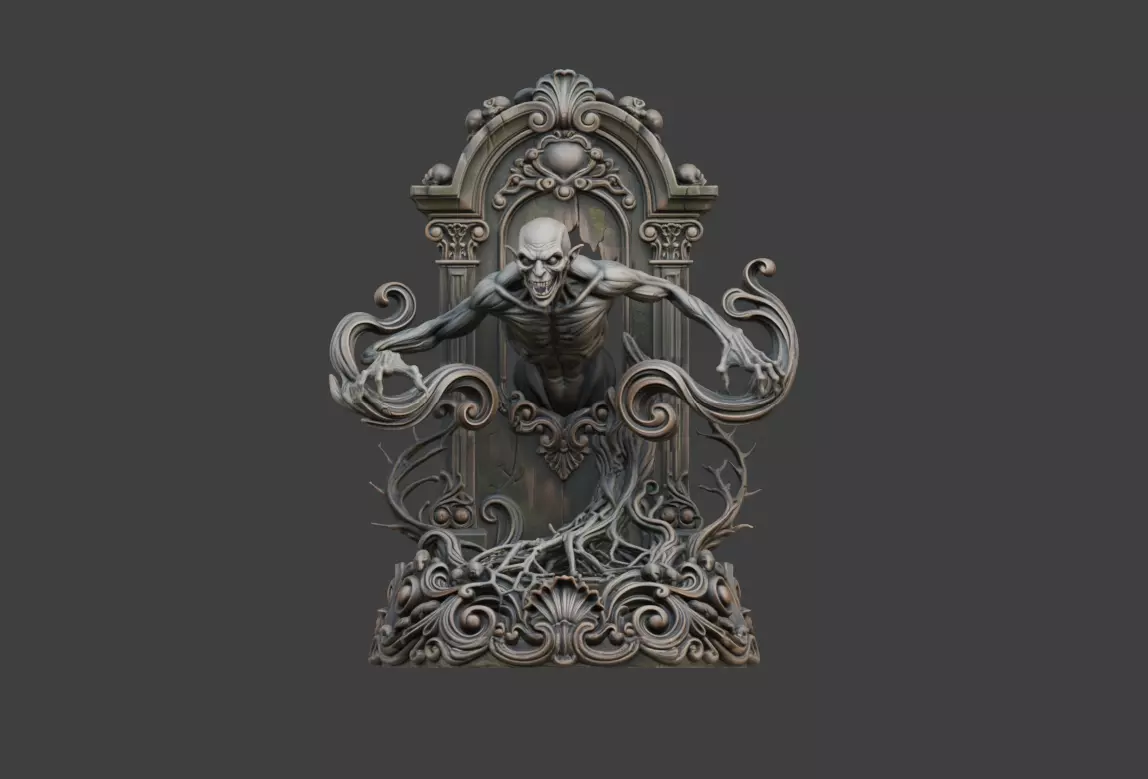
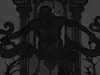
At the center of the composition stands a gaunt revenant figure bursting forward from an ornate stone portal. Its elongated limbs stretch outward in a predatory pose, creating an immediate sense of motion and menace. Unlike traditional undead creatures that shamble slowly from the grave, this being appears frozen at the exact moment of emergence, as if it has suddenly crossed the boundary separating the living world from an ancient realm of shadows.
The creature's anatomy is disturbingly thin and skeletal. Every rib, tendon, muscle line, and bony contour is carefully sculpted, creating a figure that appears starved by centuries of imprisonment. The torso is stretched tightly over its frame, exposing an unnerving level of anatomical detail that reinforces its undead nature. This emaciated appearance communicates both weakness and supernatural resilience, suggesting a being sustained not by flesh but by dark energies.
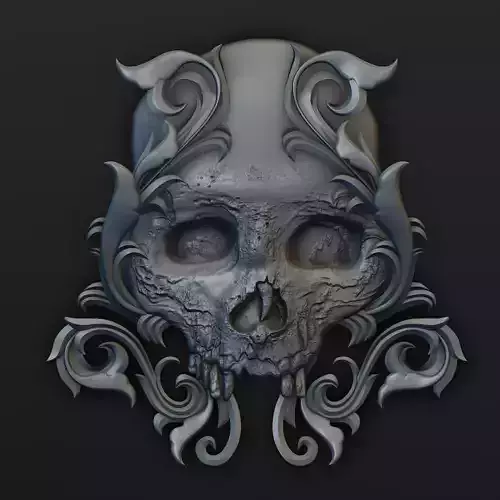
The face serves as one of the sculpture's most captivating features. Sunken eyes, sharp cheekbones, and an unnaturally wide grin create a deeply unsettling expression. The creature's gaze feels locked onto an unseen victim, while its skeletal smile radiates malice and hunger. Every facial detail contributes to a sense of intelligence beneath the horror, implying that this revenant is not merely a monster but a conscious and calculating predator.
Extending from both sides of the creature are elongated arms with impossibly thin fingers. These reaching limbs enhance the feeling that the revenant is actively pulling itself into reality. The claw-like hands seem poised to grasp, capture, or drag unsuspecting souls back into the darkness from which it emerged. Their exaggerated proportions create a dramatic silhouette that immediately draws attention.
Surrounding the figure is an elaborate gothic frame carved with decorative scrollwork, ornamental flourishes, and architectural detailing. This portal acts as both a physical structure and a symbolic threshold. The frame resembles an ancient cathedral archway, crypt entrance, or cursed monument forgotten by time. Every carved curve and decorative element contributes to the piece's gothic identity while providing a striking contrast to the monstrous creature occupying its center.
The craftsmanship visible in the frame is remarkable. Intricate ornamental motifs weave throughout the structure, creating a luxurious level of detail that evokes medieval cathedrals, haunted mansions, and aristocratic tombs. These elegant elements suggest that the gateway may once have served a sacred purpose before becoming corrupted by dark forces.
One of the model's most visually compelling features is the network of roots emerging from beneath the revenant. Thick, twisted roots spread outward from the base and climb through the structure like living veins. These roots create the impression that nature itself has become intertwined with the supernatural entity. Whether they serve as chains, sources of power, or manifestations of corruption remains open to interpretation.
The root system adds a strong environmental storytelling component. It suggests centuries of abandonment during which the structure became consumed by wilderness and decay. The roots blur the line between life and death, creating a fascinating contrast between organic growth and undead horror. Their winding forms add movement throughout the composition and guide the viewer's eye across the sculpture.
At the base of the model, additional decorative carvings and weathered textures reinforce the sense of age and history. The pedestal appears ancient, worn by time and forgotten by civilization. Subtle cracks, erosion, and environmental details contribute to the realism of the piece and strengthen its narrative presence.
The overall color palette emphasizes dark stone, aged metal, decayed organic matter, and muted spectral tones. These materials work together to create an atmosphere of dread and mystery. The restrained coloration allows the intricate sculptural details to remain the focus while maintaining a believable gothic aesthetic.
Narratively, Rootbound Revenant offers countless possibilities. In a fantasy setting, it could represent an ancient king cursed to guard forbidden knowledge. In a horror game, it might serve as a boss creature emerging from a dimensional breach. In a gothic world, it could be the manifestation of centuries-old sins buried beneath a cathedral. The model's ambiguity encourages viewers to create their own interpretations and stories.
The sculpture also functions exceptionally well as environmental storytelling. Rather than depicting a creature standing alone, it presents an entire scene frozen in time. The portal, roots, and revenant combine to create a narrative snapshot filled with tension and unanswered questions. What lies beyond the gateway? Who imprisoned the creature? Why has it returned? These mysteries make the piece particularly engaging.
As a 3D asset, Rootbound Revenant is highly versatile. It can serve as a centerpiece statue, environmental prop, dungeon decoration, boss encounter monument, haunted relic, collectible figure, cinematic focal point, museum-quality sculpture, or fantasy art showcase. Its strong silhouette ensures visual impact from a distance, while the abundance of fine details rewards close inspection.
The artistic influences behind the model appear to draw from gothic horror, dark fantasy, medieval architecture, supernatural folklore, and eldritch storytelling traditions. The result is a design that feels both timeless and original. It captures the essence of classic horror while incorporating modern levels of sculptural complexity.
Symbolically, the sculpture explores themes of imprisonment, corruption, rebirth, forbidden knowledge, mortality, and the persistence of evil through time. The revenant emerging through the gateway represents the return of forgotten horrors that refuse to remain buried. The roots symbolize the passage of centuries and the inevitable intertwining of life and death.
Whether displayed in a dark fantasy collection, used as a game asset, featured in cinematic productions, or showcased as a premium digital sculpture, Rootbound Revenant – The Graveborn Horror of the Forgotten Gate delivers an unforgettable visual experience. Its combination of gothic elegance, supernatural terror, intricate craftsmanship, and narrative depth makes it a standout piece capable of commanding attention in any environment.