High-quality 3D assets at affordable prices — trusted by designers, engineers, and creators worldwide. Made with care to be versatile, accessible, and ready for your pipeline.
Included File Formats
This model is provided in 14 widely supported formats, ensuring maximum compatibility:
• - FBX (.fbx) – Standard format for most 3D software and pipelines
• - OBJ + MTL (.obj, .mtl) – Wavefront format, widely used and compatible
• - STL (.stl) – Exported mesh geometry; may be suitable for 3D printing with adjustments
• - STEP (.step, .stp) – CAD format using NURBS surfaces
• - IGES (.iges, .igs) – Common format for CAD/CAM and engineering workflows (NURBS)
• - SAT (.sat) – ACIS solid model format (NURBS)
• - DAE (.dae) – Collada format for 3D applications and animations
• - glTF (.glb) – Modern, lightweight format for web, AR, and real-time engines
• - 3DS (.3ds) – Legacy format with broad software support
• - 3ds Max (.max) – Provided for 3ds Max users
• - Blender (.blend) – Provided for Blender users
• - SketchUp (.skp) – Compatible with all SketchUp versions
• - AutoCAD (.dwg) – Suitable for technical and architectural workflows
• - Rhino (.3dm) – Provided for Rhino users
Model Info
• - All files are checked and tested for integrity and correct content
• - Geometry uses real-world scale; model resolution varies depending on the product (high or low poly)
• • - Scene setup and mesh structure may vary depending on model complexity
• - Rendered using Luxion KeyShot
• - Affordable price with professional detailing
Buy with confidence. Quality and compatibility guaranteed.
If you have any questions about the file formats, feel free to send us a message — we're happy to assist you!
Sincerely,
SURF3D
Trusted source for professional and affordable 3D models.
More Information About 3D Model :
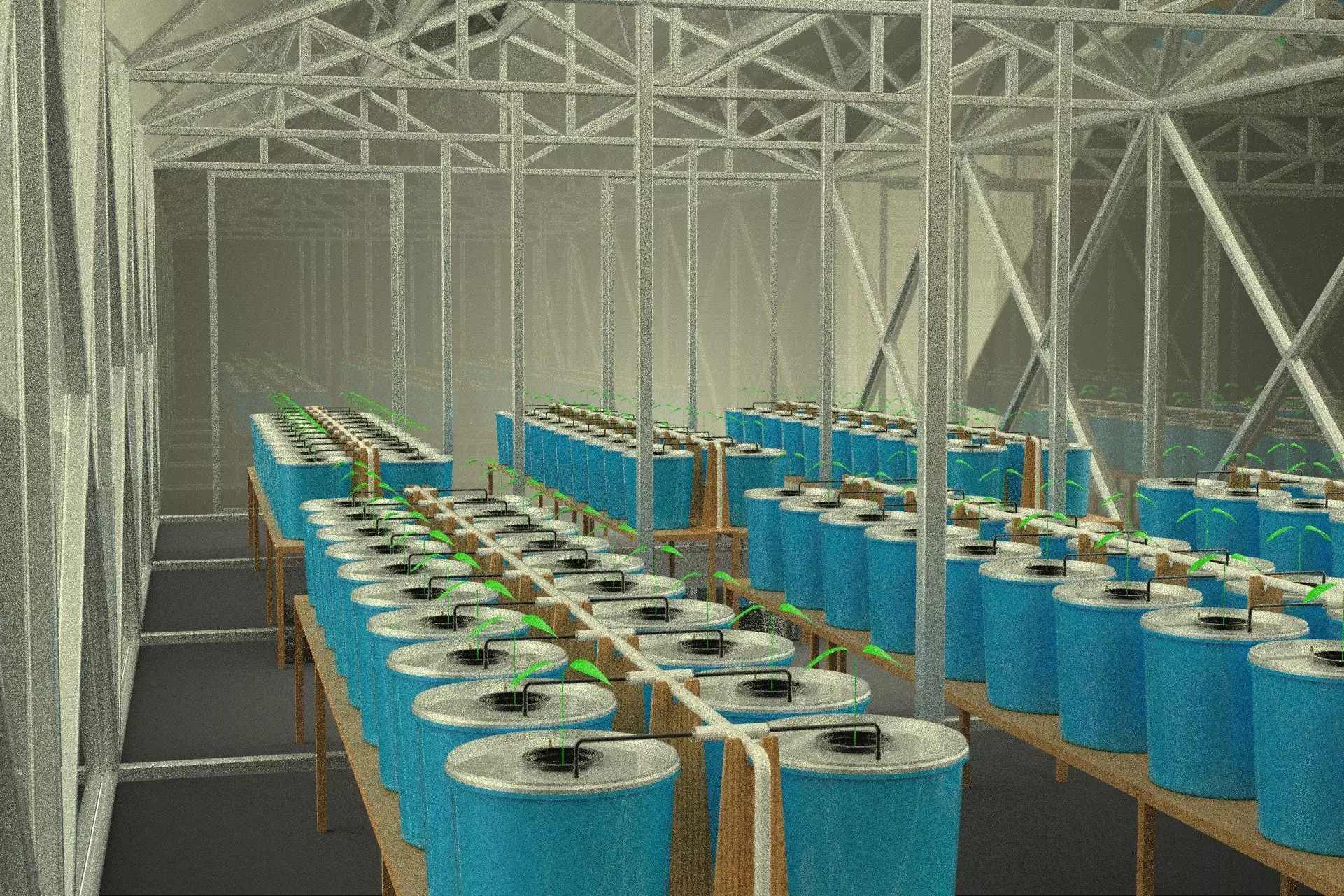
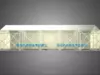
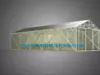
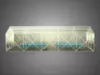
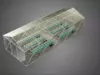
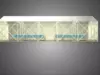
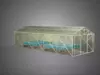
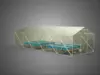
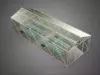
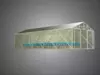
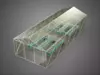
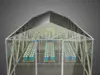
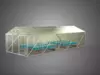
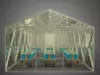
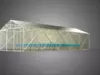
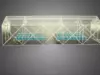
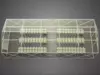
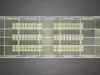
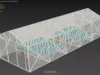
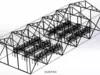
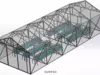
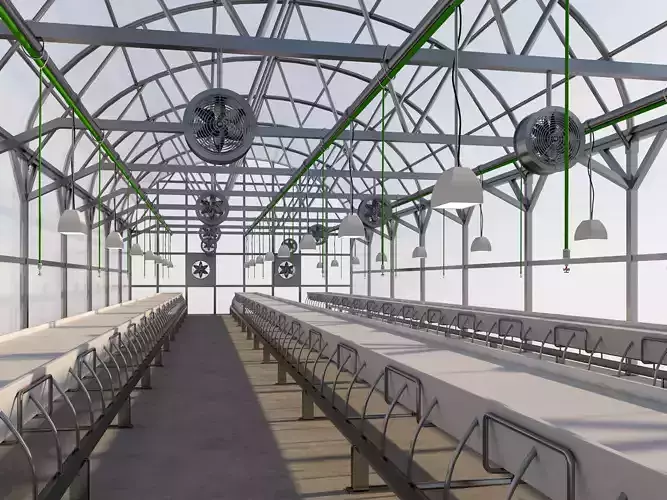
The Bato Dutch Bucket Hydroponic System situated within a Green Glass Hot House represents an advanced methodology in Controlled Environment Agriculture (CEA). This integrated configuration combines a highly efficient, modular hydroponic technique—the Bato Bucket—with a specialized structural environment utilizing green-tinted glazing for optimized thermal and light management. It is primarily employed for the high-density cultivation of vining crops, fruiting vegetables, and certain ornamental species.
---
I. The Bato Dutch Bucket Hydroponic System
The Bato Dutch Bucket system, often referred to simply as the Dutch Bucket System or Bato Bucket System, is a scalable, semi-closed or open-loop drip irrigation method distinguished by its use of individual, modular containers (buckets) connected by a common drain line.
A. Components and Operation
- Bato Buckets: These containers, typically constructed from UV-stabilized, food-grade plastic, are designed to hold an inert growing medium (e.g., perlite, coco coir, rockwool, or expanded clay pebbles). The crucial distinguishing feature of the Bato design is the incorporation of a siphon elbow or drain fitting located a few centimeters above the bottom of the container.
- Siphon Elbow: This fitting ensures that a shallow reservoir of nutrient solution remains constantly at the base of the bucket. This residual solution provides moisture and essential nutrients to the bottom roots, preventing desiccation, while the air space above the water line ensures adequate root zone oxygenation (aeration). This balance is critical for preventing root rot and optimizing nutrient uptake.
- Irrigation Mechanism: Nutrient solution is delivered to the top of the substrate in each bucket via individual drip emitters, typically pulsed several times daily depending on crop stage, ambient temperature, and substrate moisture retention.
- Drainage: Excess solution, after passing through the substrate and nourishing the roots, drains out through the common manifold. In a typical commercial setup, this is an open-loop (drip-to-waste) system, where the effluent is collected and sometimes reused (recirculated) after filtration and pH/EC adjustments, although disposal is common to prevent disease spread.
#### B. Advantages of the Bato System
The modular nature allows for quick replacement or isolation of individual plants affected by disease, minimizing systemic risk. It is particularly well-suited for large, long-term crops (e.g., tomatoes, cucumbers, peppers) that require substantial vertical support and prolonged vegetative growth, offering a high degree of control over nutrient delivery and substrate saturation levels.
### II. The Green Glass Hot House Environment
The Green Glass Hot House, or greenhouse, provides the necessary climate control infrastructure for year-round cultivation, protecting the crop from adverse weather and pests. The use of green-tinted glass introduces a specific environmental modification crucial for light and temperature regulation.
#### A. Structural and Glazing Properties
The structure utilizes a framework (typically steel or aluminum) supporting glass panes that are chemically or structurally tinted green. Unlike standard clear horticultural glass, green glass selectively transmits and filters solar radiation:
- Infrared Filtering: Green glass exhibits increased absorption or reflection in the near-infrared (NIR) and far-red spectrums. This property significantly reduces the thermal load within the structure compared to clear glass, mitigating excessive daytime temperatures (the hot house effect) and reducing the need for active cooling systems, especially in high-intensity solar regions.
- Light Spectrum Manipulation: The tinting affects the Photosynthetically Active Radiation (PAR) spectrum (400–700 nm) reaching the plants. While overall light transmission might be marginally reduced, the filtered spectrum can influence plant morphology (photomorphogenesis), potentially resulting in shorter, sturdier plants or specific flowering responses, depending on the exact chemical composition of the glass.
- Energy Efficiency: The thermal mass and insulating properties of glass, coupled with the passive cooling effect of the green tint, contribute to stable temperature and humidity levels essential for maximizing hydroponic yield.
### III. System Integration and Application
The combination of the Bato Dutch Bucket System and the Green Glass Hot House creates a highly optimized environment for professional horticulture. The protected nature of the green glass structure ensures environmental consistency, which is vital for the precise nutrient management afforded by the hydroponic system.
This integrated approach maximizes water and nutrient use efficiency, often achieving yields far exceeding conventional soil-based cultivation. The system is routinely applied in commercial cultivation for high-value crops such as vine tomatoes (including cherry and beefsteak varieties), bell peppers, eggplants (aubergines), and cucurbits.
---
KEYWORDS: Hydroponics, Bato Bucket, Dutch Bucket System, Controlled Environment Agriculture, CEA, Greenhouse, Green Glass, Hot House, Soilless Culture, Drip Irrigation, Drip-to-Waste, Recirculating Hydroponics, Substrate Culture, Perlite, Coco Coir, Root Zone Aeration, Nutrient Film Technique, NFT, Deep Water Culture, DWC, Commercial Horticulture, Environmental Control, Thermal Management, Glazing, Photosynthetically Active Radiation, PAR, Solanaceous Crops, Vining Plants, Modular System, Precision Agriculture, Siphon Elbow, Effluent Management.