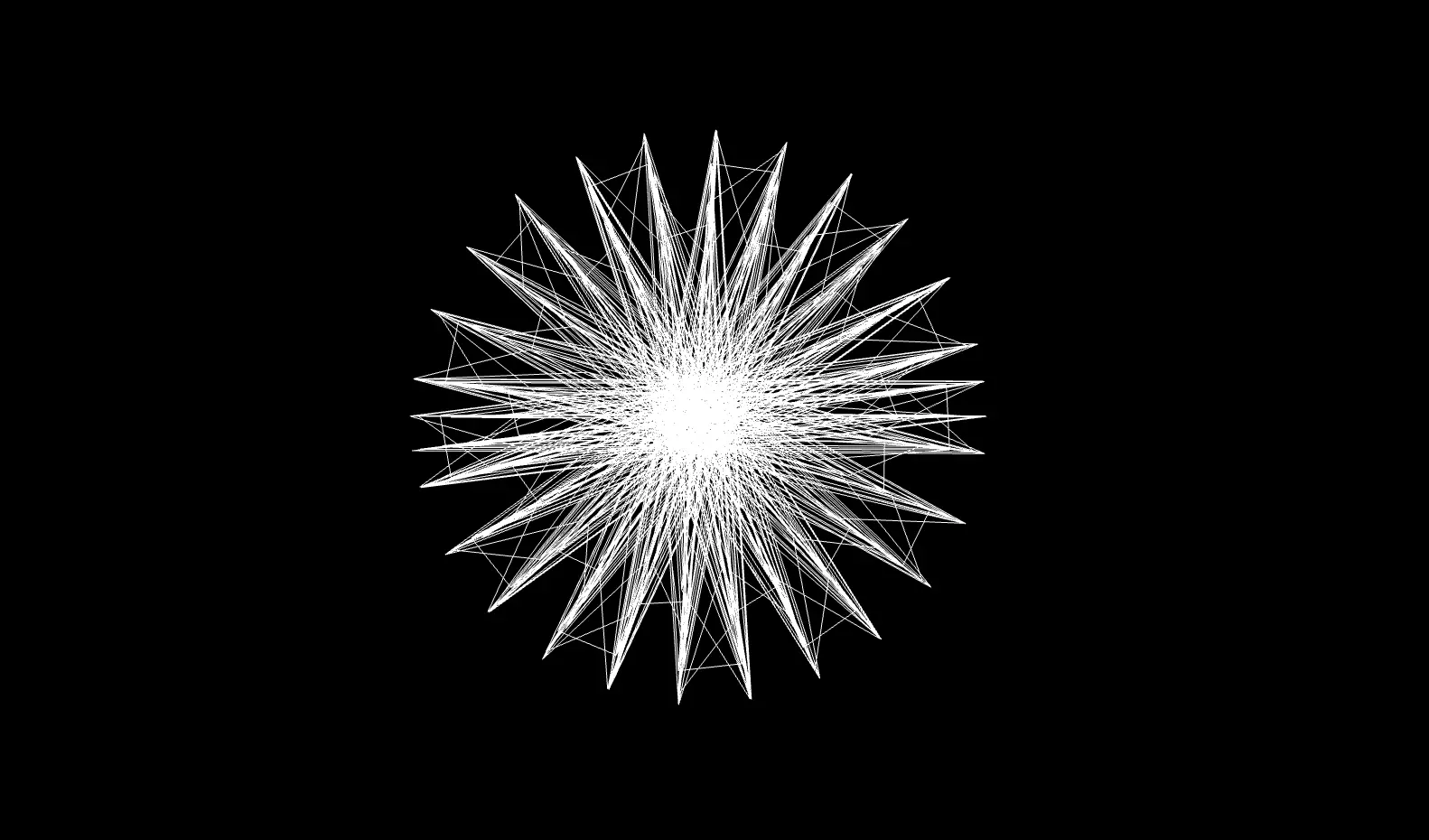
UUON-OH-0005 Specification SummaryΔmension Mathematical Universe – Nanometer-Precision Orthoplex Crossfield Geometry
Core Geometric AttributesModel ID: UUON-OH-0005
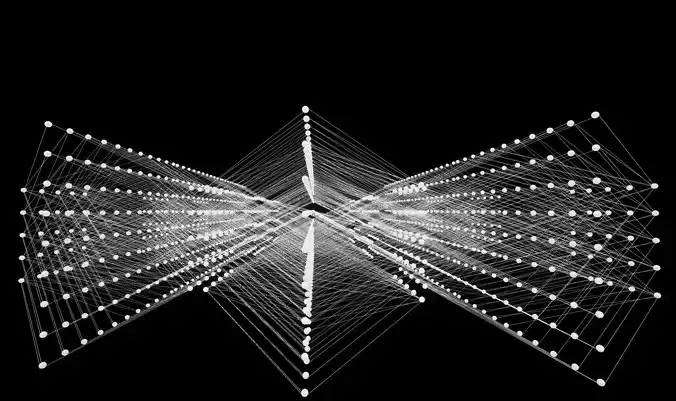
Geometry Type: Orthoplex Crossfield (chaotic)Vertex Count: 308
Precision Level: Nanometer-scale (15-decimal mathematical computation)
Parametric Configuration:
a = 1
b = 1
c = 0
d = 0
u: 0 to 2π
v: 0 to π
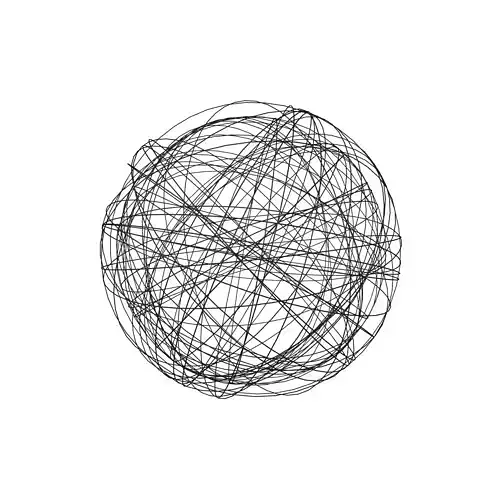
Mathematical and Structural SummaryThis model is a symmetry-locked, orthoplex-derived crossfield structure, calculated at nanometer-scale mathematical fidelity. Every node and edge expresses directional alignment across opposing poles, establishing an internally balanced tension network derived from orthogonal field convergence.
While minimal in vertex count (308), its structural density and cross-vector coherence deliver extreme computational clarity. The construction enables high-resolution exploration of:
Bilateral Field Symmetry
Directional Tension and Release Patterns
Axial Rotation and Inversion Equilibrium
Polarized Force Channeling Across a Spherical Domain
Precision SignificanceThis form is not a low-resolution object—it is a deliberate mathematical reduction encoding dynamic structure with maximum symmetry efficiency. Each vertex is computed using floating-point resolution at nanometer scale, ensuring that field harmonics and energy transitions are mathematically consistent across all axes.
This makes the geometry suitable for:
Rotational harmonic simulation
Wavefront inversion studies
Force redirection and shielding analysis
Topological phase-shift encoding
Balance algorithms in closed dynamic systems
Dynamic InterpretationUUON-OH-0005 models a coherent orthoplex transformation — a mathematical entity in which opposing directional vectors interlace and self-stabilize through rotational inversion.
What emerges is a dynamic architecture where:
Opposing field axes create a phase-stable tension node
Outer expansions are synchronously constrained by internal polarity
The system resolves into a geometric lock that prevents chaotic divergence while maintaining rotational freedom
In short, it is a cross-locked force lattice: a geometry designed to resist collapse while remaining energetically responsive — ideal for metaphysical modeling, energetic shielding, rotational balance systems, or symbolic mechanical dynamics.
Rendering DetailsVisualization Mode: Wireframe
Color Scheme: Neon Green
Export Quality: Ultra-HD (10x)
Material Type: PBR Standard
Metalness: 0.3
Roughness: 0.2
Export Format: GLB / USDZ / OBJ
Package Type: Ultra-HD ZIP Package
Origin MetadataCreated By: Phillip A. Ruiz III / UUON Foundation
Platform: Δmension Mathematical Universe
Creation Date: July 22, 2025
This model represents a minimal yet complete harmonic intelligence structure, designed to encode directional force stabilization through simple but deeply entangled geometry. Its purpose is not visual complexity, but symmetry efficiency at the edge of energetic resolution.