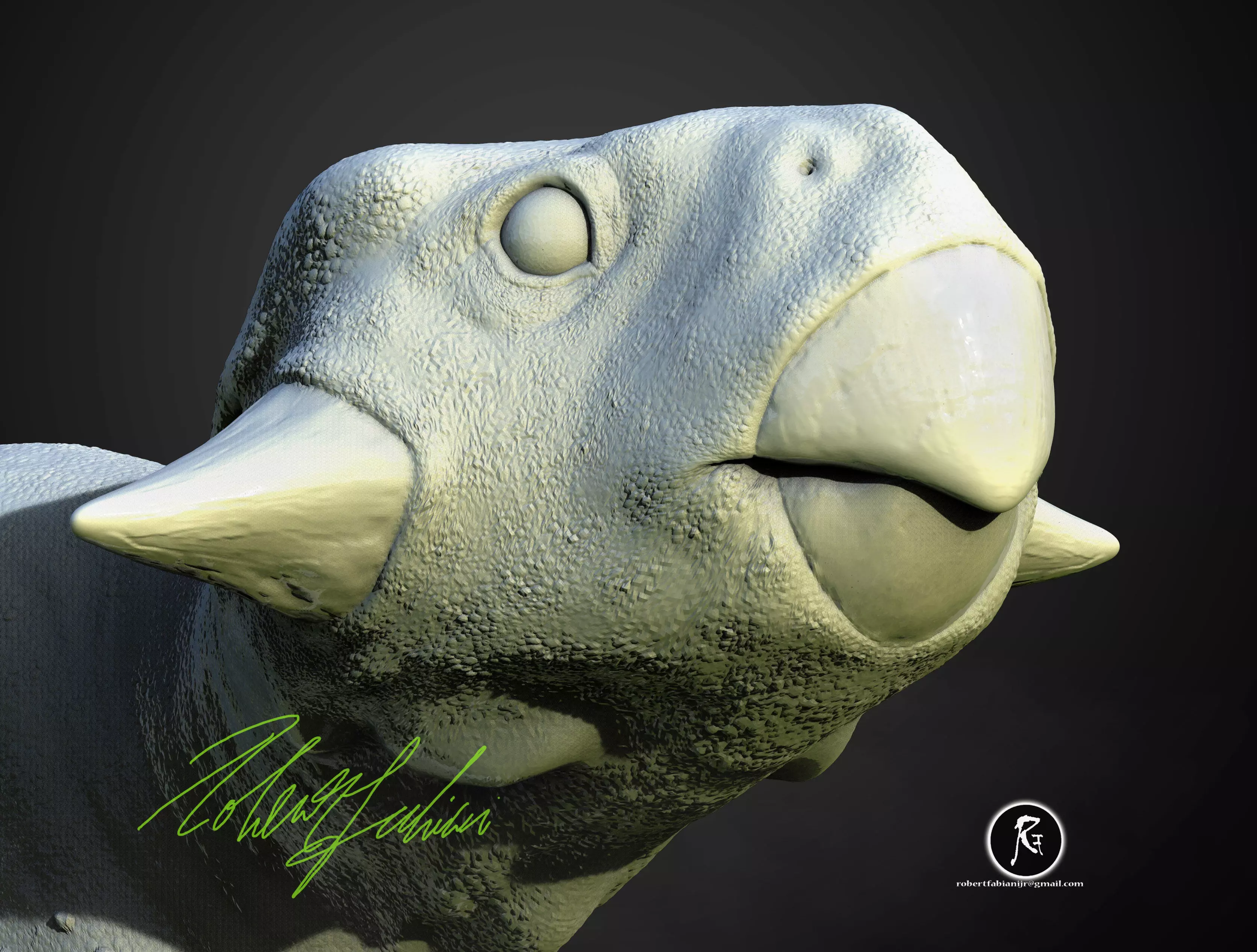
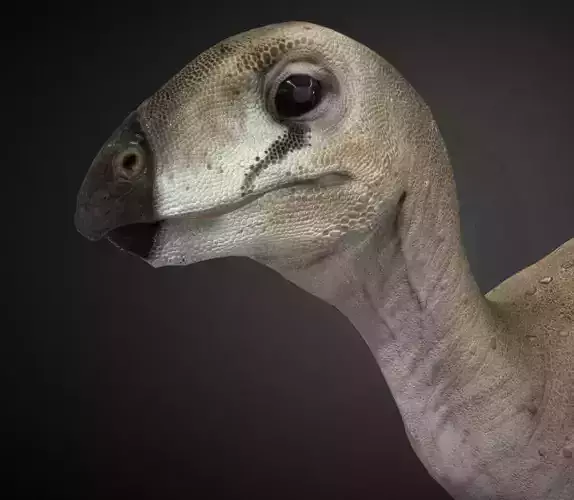
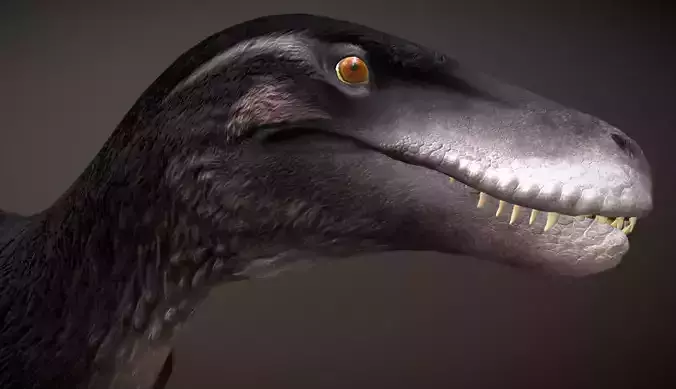
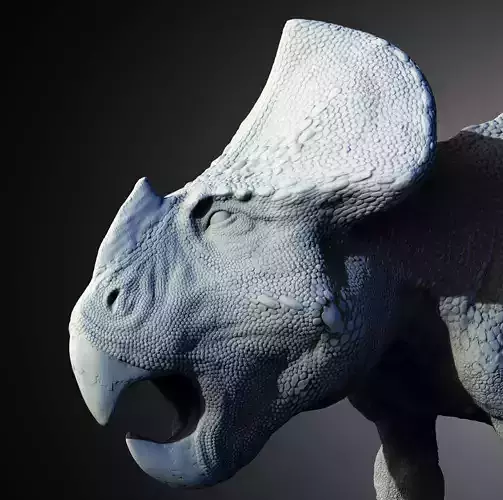
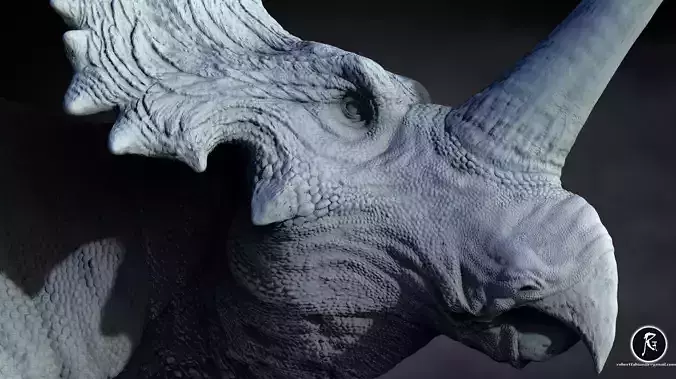
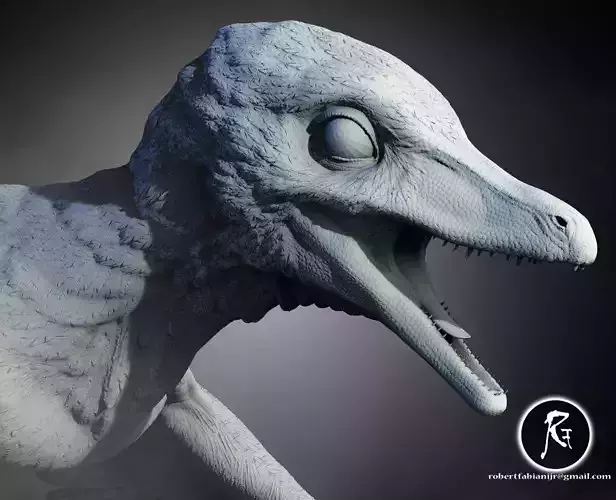
Psittacosaurus was a small, early ceratopsian dinosaur that lived during the Early Cretaceous period, roughly 126–101 million years ago, in what is now Asia, particularly China, Mongolia, and parts of Russia. Unlike the later horned dinosaurs such as Triceratops, Psittacosaurus lacked large facial horns and frills. Instead, it had a short, deep skull with a strongly curved beak resembling that of a parrot, which it used to crop tough vegetation. The body was compact with strong hind limbs, suggesting it was primarily bipedal, although it could likely move on all fours while feeding.
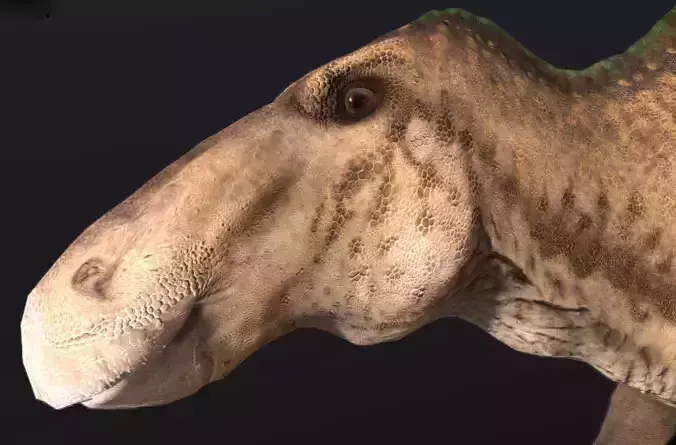
One of the most remarkable discoveries related to Psittacosaurus is the preservation of soft tissues in some fossils, including bristle-like filaments along the tail. These structures may have functioned in display or communication. Skin impressions have also revealed detailed scale patterns and even preserved color patterns, making it one of the best-understood dinosaurs in terms of external appearance. Most species were relatively small, typically about 1–2 meters long, and likely lived in herds, feeding on low-growing plants in forested and floodplain environments.