High-quality 3D assets at affordable prices — trusted by designers, engineers, and creators worldwide. Made with care to be versatile, accessible, and ready for your pipeline.
Included File Formats
This model is provided in 14 widely supported formats, ensuring maximum compatibility:
• - FBX (.fbx) – Standard format for most 3D software and pipelines
• - OBJ + MTL (.obj, .mtl) – Wavefront format, widely used and compatible
• - STL (.stl) – Exported mesh geometry; may be suitable for 3D printing with adjustments
• - STEP (.step, .stp) – CAD format using NURBS surfaces
• - IGES (.iges, .igs) – Common format for CAD/CAM and engineering workflows (NURBS)
• - SAT (.sat) – ACIS solid model format (NURBS)
• - DAE (.dae) – Collada format for 3D applications and animations
• - glTF (.glb) – Modern, lightweight format for web, AR, and real-time engines
• - 3DS (.3ds) – Legacy format with broad software support
• - 3ds Max (.max) – Provided for 3ds Max users
• - Blender (.blend) – Provided for Blender users
• - SketchUp (.skp) – Compatible with all SketchUp versions
• - AutoCAD (.dwg) – Suitable for technical and architectural workflows
• - Rhino (.3dm) – Provided for Rhino users
Model Info
• - All files are checked and tested for integrity and correct content
• - Geometry uses real-world scale; model resolution varies depending on the product (high or low poly)
• • - Scene setup and mesh structure may vary depending on model complexity
• - Rendered using Luxion KeyShot
• - Affordable price with professional detailing
Buy with confidence. Quality and compatibility guaranteed.
If you have any questions about the file formats, feel free to send us a message — we're happy to assist you!
Sincerely,
SURF3D
Trusted source for professional and affordable 3D models.
More Information About 3D Model :
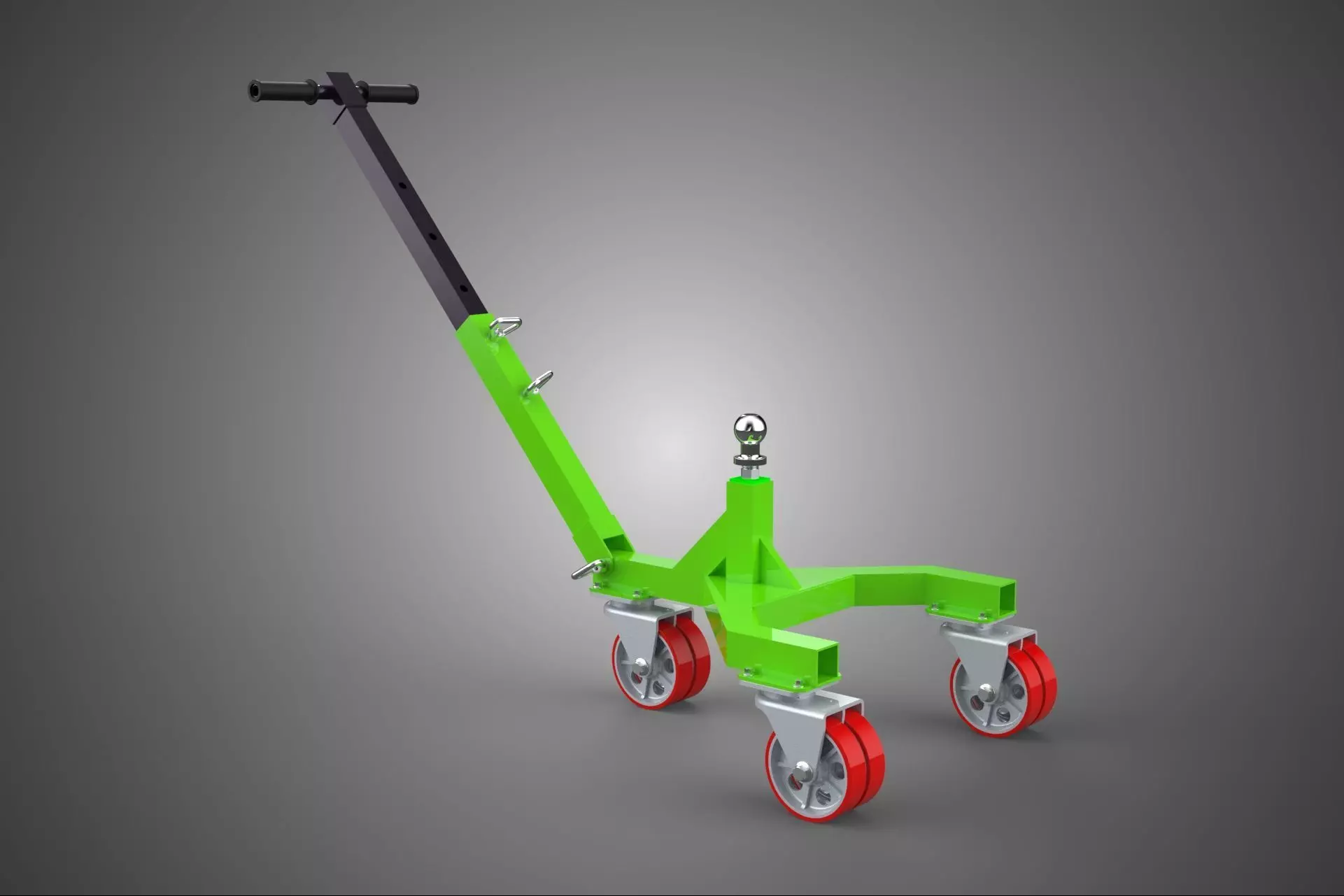
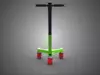
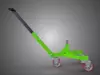
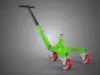
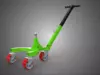
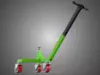
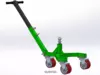
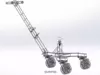
BOAT TROLLEY TRAILER CART DOLLY JACK BALL HITCH WHEEL MOVER TOW
This highly composite title refers to a specialized category of material handling equipment known generically as a Trailer Mover or Trailer Dolly. These devices are engineered specifically for the precise, slow-speed maneuvering and repositioning of vehicular trailers—predominantly those utilized for the transport and launching of recreational watercraft (boats)—in environments where traditional towing by a motor vehicle is impractical, inefficient, or spatially impossible.
I. Definition and Function
The apparatus functions by mechanically assuming the load of the trailer's tongue weight, coupling directly to the trailer’s hitch assembly (typically via a standard ball hitch mechanism), and utilizing leverage and specialized wheels to allow an operator to push, pull, or minimally power the movement of the trailer. Unlike the permanent wheels of the trailer itself, the dolly provides high maneuverability, often incorporating swivel casters or an articulated steering mechanism, facilitating movement in confined spaces such as garages, driveways, tight storage facilities, or staging areas.
The terminology used in the composite title reflects both the function and form of the device:
- Trolley/Cart/Dolly: Identifies the apparatus as a small, wheeled frame used for conveying loads, typically manually or semi-manually.
- Trailer/Boat: Specifies the primary load and operational context (marine equipment handling).
- Jack/Ball Hitch: Refers to the coupling and lifting mechanism utilized to secure the trailer's tongue and manage the vertical load.
- Wheel Mover/Tow: Describes the intended mechanical outcome—low-speed positional adjustment, distinct from road towing.
### II. Mechanical Configurations and Design
Trailer movers are generally categorized into two primary mechanical types: manual and powered.
#### A. Manual Trailer Dollies
Manual dollies rely entirely on human effort and mechanical advantage to initiate movement. They typically consist of a robust metal frame, often triangular or T-shaped, terminating in a coupling mechanism (the ball hitch mount).
- Wheels: Feature two main wheels and sometimes a third support wheel or swivel caster to stabilize the load. The leverage provided by the handles offsets the tongue weight, enabling a single operator to pivot the load.
- Load Capacity: Manual dollies are suitable for lighter boat trailers, generally limited by the maximum acceptable manual tongue weight an operator can safely manipulate (typically up to 600 lbs of static tongue weight).
#### B. Powered Trailer Movers (Electric Dollies)
Powered trailer movers incorporate an electric motor (usually battery-operated) and a transmission system to drive one or more wheels, eliminating the need for manual pushing or pulling force.
- Drive Mechanism: Utilizing high-torque gearing, these devices attach securely to the trailer frame or coupler. The motorized wheel, often equipped with deep treads for traction, is commanded via a simple control panel or remote unit.
- Increased Capacity: Powered units are essential for moving heavier boat trailers, often managing tongue weights ranging from 1,000 lbs up to 10,000 lbs, depending on the commercial grade of the unit. These systems transform the task from a physical exertion into a controlled, motorized manipulation.
- Traction Enhancement: To counteract the tendency of the drive wheel to slip under heavy load, some high-capacity models incorporate mechanisms to intentionally shift additional tongue weight onto the dolly’s drive wheels, enhancing friction and traction.
### III. Operational Context and Utility
The primary utility of the boat trailer dolly is the optimization of space and the facilitation of precision coupling.
Confined Space Maneuvering: Standard vehicle towing requires substantial clearance for turning arcs and backing procedures. Trailer movers allow trailers to be pivoted in place or navigated through narrow gates, tight property lines, or complex garage configurations that restrict traditional automotive access.
Hitch Alignment and Coupling: The slow, deliberate motion afforded by a dolly simplifies the process of aligning a trailer coupler precisely over a vehicle’s tow ball, a task often cumbersome when relying solely on the driver's manipulation of the towing vehicle.
Load Management: By temporarily replacing the fixed trailer jack stand during movement, the dolly allows the operator to control the horizontal pitch and yaw of the trailer without engaging the towing vehicle.
### IV. Safety Considerations
Operation of a trailer dolly requires careful consideration of the trailer's center of gravity and the apparatus’s defined maximum load capacity (tongue weight). Overloading the dolly, or manipulating a trailer with improperly distributed load (causing excessive tongue weight), can lead to instability, mechanical failure, or operator injury due to loss of control, particularly with manual variants. The apparatus is designed exclusively for low-speed, non-roadway movement.
KEYWORDS: Trailer dolly, boat mover, electric trailer jack, ball hitch coupling, manual trailer handling, precision positioning, low-speed conveyance, boat storage, yard maneuvering, material handling, tongue weight, load capacity, swivel caster, articulated steering, hydraulic jack dolly, recreational boating, storage optimization, garage organization, tow auxiliary, vehicle staging, trailer positioning, marine equipment, heavy duty dolly, wheel mover, trailer coupling, jockey wheel replacement, traction enhancement, electric powertrain, small trailer transport, non-road towing.